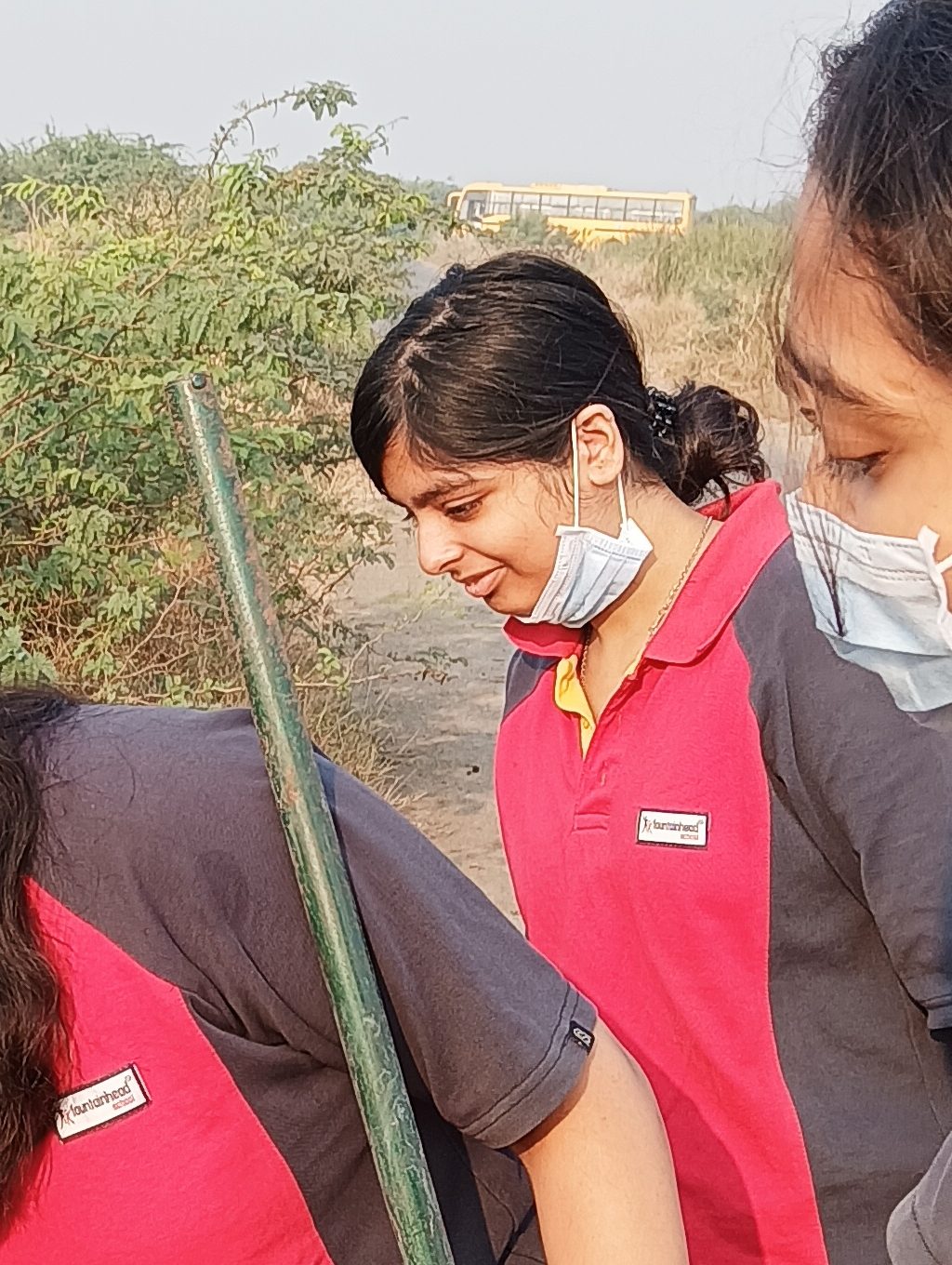
For the community clean-up drives, conducted over four days from January 16th to February 13th, we focused on cleaning weed-infested areas in a lake and nearby locations along the Tapi River. This experience was entirely new to me, marking my first time participating in such environmental initiatives. It was a deeply enriching learning opportunity, as I witnessed firsthand the impact of our efforts. It was incredibly rewarding to see the lake transform after clearing the weed and the improved conditions along the riverbank. During the first two drives, we removed duckweed from a pond, which had been reducing oxygen levels and preventing birds and aquatic life from thriving. The other two drives were focused on cleaning the riverbanks. By the end of all four drives, I realized how even short-term actions to preserve nature can create meaningful impacts.
LO2: Demonstrate That Challenges Have Been Undertaken, Developing New Skills
Participating in the community clean-up drives was both physically demanding and transformative. Clearing large portions of weeds and cleaning land near the Tapi River required substantial effort and persistence. Removing the harmful duckweed was particularly challenging, as we had to employ specific strategies and tools to ensure the pond could support wildlife once again. This experience helped me develop practical skills, such as using tools efficiently and coordinating with team members to cover large areas effectively. Working alongside others improved my teamwork and communication skills, as we had to ensure fair division of tasks and seamless execution. Additionally, I cultivated patience and persistence, recognizing that meaningful environmental changes require sustained effort and dedication.
LO7: Recognize and Consider the Ethics of Choices and Actions
The clean-up drives encouraged me to reflect on the ethical responsibility we hold toward the environment. Observing how the duckweed affected oxygen levels in the pond and harmed aquatic life reinforced the delicate balance of ecosystems and how human intervention can restore it. By taking action to remove the weeds and clean the riverbanks, we directly contributed to improving the local ecosystem, benefiting both wildlife and the surrounding community. These efforts also underscored the ethical imperative to counteract the consequences of pollution and neglect. This experience heightened my awareness of how human choices impact natural habitats and instilled a sense of accountability for preserving the environment for future generations.
Conclusion
The community clean-up drives were a transformative experience that helped me develop new skills while emphasizing the significance of environmental responsibility. Overcoming the physical challenges of removing duckweed and cleaning riverbanks taught me the value of patience, persistence, and teamwork. Witnessing the positive impact of our efforts reinforced the importance of ethical actions in preserving nature. This experience has inspired me to continue participating in activities that contribute to environmental preservation and sustainability.