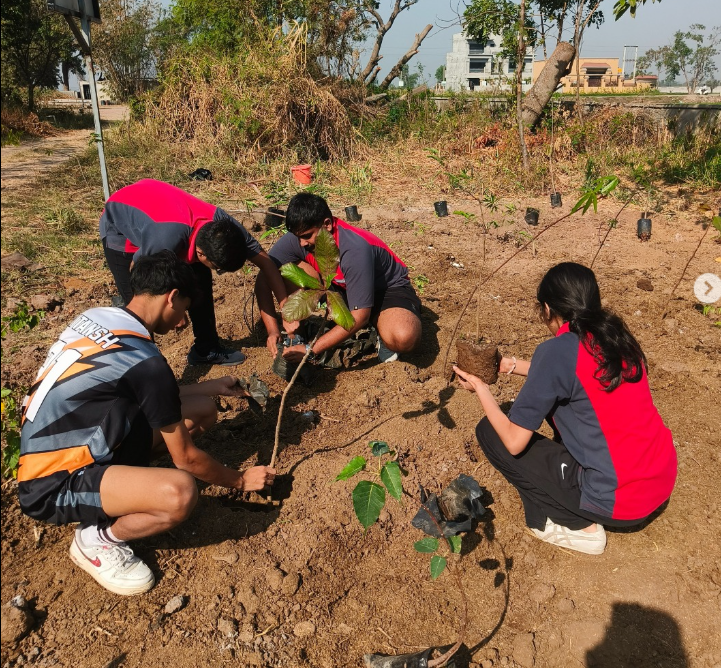
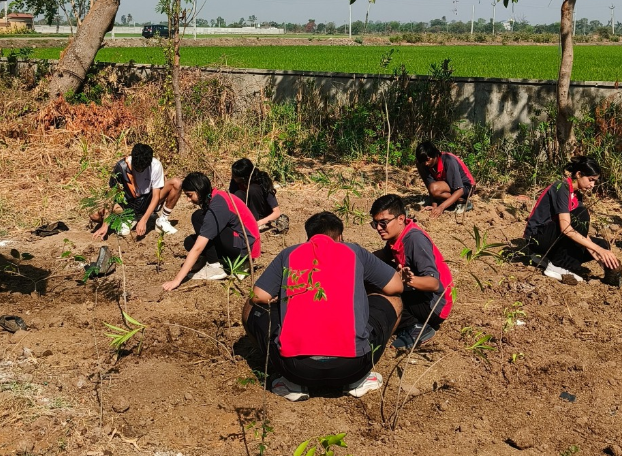
I took the initiative to research and use the Miyawaki planting method as part of my CAS service experience. This technique involves intensively planting native species in limited areas to promote rapid forest growth. Restoring biodiversity, enhancing air quality, and halting climate change are all made possible by this technique. Although the project first appeared simple, it presented unexpected challenges and gave me the opportunity to learn useful new skills.
L1: Identifying Strengths & Areas for Growth
I learned from this experience that I am very good at planning and directing environmental projects. But I also became aware of how little I knew about plant biology, which motivated me to learn more. I discovered how to welcome criticism and keep improving our planting plan. This event reaffirmed how crucial flexibility and an openness to learning are.
L2: Demonstrating Challenges Undertaken & Developing New Skills
Understanding the science underlying the Miyawaki approach and modifying it for the particular setting we were working in was one of the most difficult things I had to do. In contrast to conventional afforestation initiatives, this approach necessitates choosing the appropriate native species mix and positioning them to promote competition and quicker growth. I had to conduct in-depth study, speak with specialists, and modify our strategy in light of the resources at hand. My abilities in ecological research, project management, and problem-solving were enhanced by this experience.
L4: Showing Perseverance & Commitment
Continuous care is necessary for the Miyawaki approach, particularly in the beginning. Persistence was required for routine watering, growth monitoring, and shielding the saplings from outside dangers like pests or harsh weather. We stayed dedicated to the research and came up with ways to increase survival rates in spite of early setbacks, including a few plants not surviving. Now that the forested area is starting to grow significantly, our persistence is paying off.
L5: Working Collaboratively & Its Benefits
Without teamwork, this endeavor would not have been feasible. I made sure that our efforts were well-coordinated by working with local environmentalists, instructors, and other students. The project was more pleasurable and easier to handle when everyone worked together. We created a sense of group accomplishment by motivating one another, sharing tasks, and exchanging expertise. I discovered that collaboration increases productivity and fortifies the effects of environmental projects.
Final Reflection
It has been life-changing to take part in this Miyawaki planting effort as a CAS service project. It pushed me both mentally and physically, gave me new abilities, and reaffirmed the value of tenacity and cooperation. More significantly, it demonstrated to me the strength of taking charge to improve the environment. I’m eager to watch this little forest grow over time and hope it will motivate people to take action for a more environmentally friendly future.