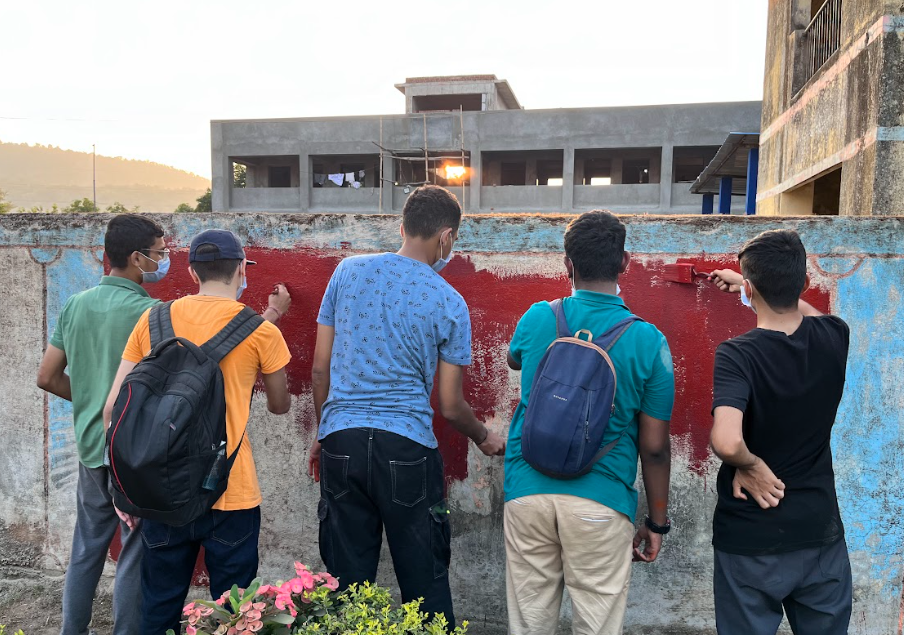
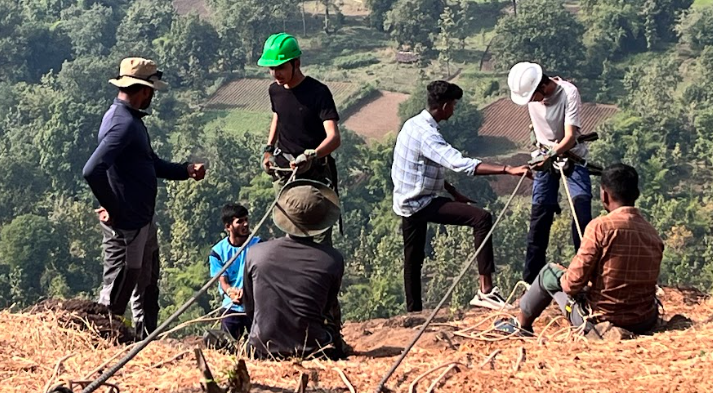
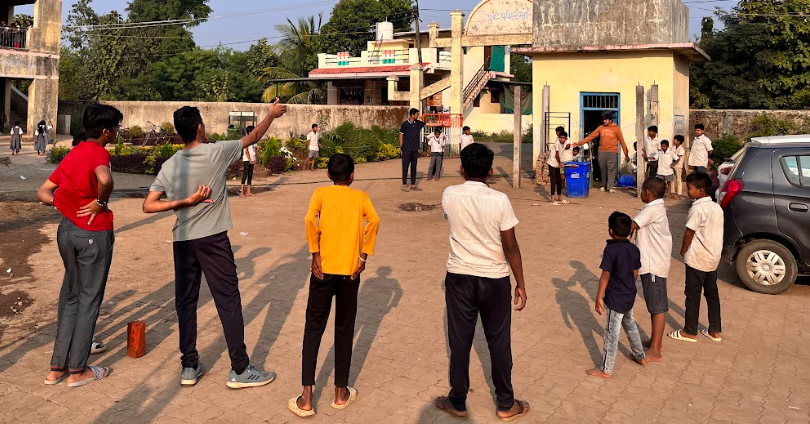
For my Rural Immersion Trip we visited Lackaddi to experience and immerse ourselves in the rural areas of India for one week of december. The trip aimed at exposing us t indigenous lives, and understand their giving In this trip we went to Lackkadi to experience and immerse ourselves in the rural areas of India for one week of december. The main purpose of this trip was to have a full immersive experience of the rural society and understand the life of the tribes who lived there. The trip as consisted of activities such as wa climbing, trekking and etc, which added upto my Activities For the creativity part we visited a ca sch where we decided to paint the boundaries f the sch through warli painting. For this we first cleaned up the wa and then In der t understand these people we first figured out their source of income. Majority of the people living there had farming as their income source. Further t experience their challenges we performed sme farming practices through local tools
LO1: Identify own strengths and develop areas for growth
During the Rural Immersion Trip, I discovered my strength in adaptability as I navigated the unfamiliar environment and engaged with the local community. However, I also recognized an area for growth in my communication skills, particularly in interacting with people from different cultural backgrounds. This experience challenged me to be more open and understanding, enhancing my ability to connect with others.
LO2: Demonstrate that challenges have been undertaken, developing new skills in the process
The trip presented various challenges, such as physical exertion during trekking and climbing, which tested my stamina and perseverance. I also faced the challenge of understanding local customs and practices. Through these experiences, I developed new skills in teamwork, problem-solving, and resilience, learning to rely on my peers and adapt to changing circumstances.
LO3: Initiating and Planning a CAS Experience
Before the trip, we engaged in planning sessions where we set objectives for our visit, including understanding the indigenous lifestyle and contributing to the local community through creativity. I was involved in organizing our activities, such as painting the school boundaries with Warli art and participating in farming practices. This taught me the importance of thorough planning and foresight in ensuring that our goals were met during the immersion.
LO4: Show commitment to and perseverance in CAS experiences
Throughout the week, I demonstrated commitment by actively participating in all planned activities, even when faced with difficulties such as physical fatigue or unfamiliar tasks. I remained dedicated to learning about the local culture and contributing positively to the community, which instilled a sense of fulfillment and purpose in my efforts.
LO5: Demonstrate the skills and recognize the benefits of working collaboratively
The success of our trip relied heavily on collaboration among our group members. By working together on activities like cleaning the school and painting the boundaries, I learned the value of teamwork and collective effort. We were able to share ideas, delegate tasks, and support one another, leading to a more impactful experience for both us and the local community. This reinforced my belief that teamwork enhances creativity and problem-solving in any project.
LO6:Engagement with issues of Global significance.
Because the peasants had to migrate frequently in order to find work, poverty was one of the major worldwide challenges there. One of the things we all did was gather about 11,000 rupees to donate clothing and school supplies to one of the nearby government schools, after which we gave the items to everyone. Additionally, we went to a number of economically viable sustainable infrastructures that made use of renewable energy sources.
LO7: Recognize and consider the ethics of choices and actions
Throughout the trip, I was mindful of the ethical implications of our actions. Understanding that our presence could impact the local community, I ensured that our activities were respectful and considerate of their culture. For instance, while engaging in farming practices, I acknowledged the significance of their traditional methods and sought to learn rather than impose. This experience reinforced the importance of ethical considerations in service projects, emphasizing that our actions should aim to empower rather than exploit the communities we engage with. By reflecting on our intentions and the potential consequences of our work, I learned the value of conducting meaningful and respectful service.