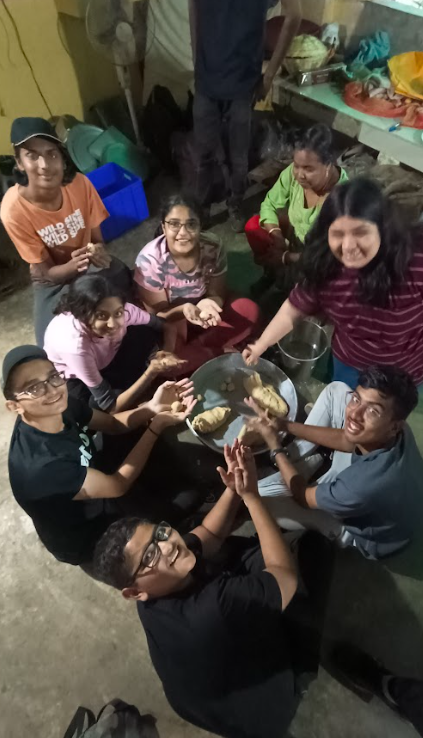
During a 5-6 day trip to Dhanpari with my classmates, I immersed myself in the local culture and environment while engaging in a range of meaningful activities. We interacted with the local community, learning skills such as pot-making and basket weaving, teaching local children in school, and painting walls. We also took part in physically demanding activities like ziplining, trekking, and obstacle courses, which allowed me to connect with nature in a profound way. Our group cooked meals for ourselves, shopped locally, and supported the residents, all while fostering camaraderie with both the community and classmates. My goal was to embrace teamwork, learn new skills, and contribute meaningfully to the local community.
CAS Strands: Creativity, Activity, Service
This CAS experience encapsulated all three CAS strands. Creativity was demonstrated through our involvement in pot-making, basket weaving, painting, and interacting with the children in innovative ways. Activity was present in the physical challenges we undertook—ziplining, trekking, and obstacle courses—developing resilience and strength. Service was central to our interactions with the community, from teaching children to painting walls and supporting local livelihoods. The holistic nature of the experience contributed to a profound understanding of sustainability, community engagement, and self-growth. By undertaking this experience, I contributed to several Sustainable Development Goals (SDGs), including Quality Education, Decent Work and Economic Growth, and Reduced Inequalities.
Learning Outcomes
LO 2: Demonstrating that challenges have been undertaken, developing new skills in the process
One of the most challenging aspects of this experience was adapting to a new environment and stepping out of my comfort zone. Learning skills like pot-making and basket weaving was not only physically demanding but also required immense patience. The physical challenges, especially ziplining and trekking, were new experiences for me. I had never done anything like it before, which made them both exciting and intimidating. I overcame these challenges by maintaining a positive attitude and focusing on the learning outcomes rather than perfection. Undertaking these challenges taught me perseverance, adaptability, and the importance of staying open to new experiences. I feel proud of having learned new skills, which will be useful in the future for both personal development and community work. New skills broaden our horizons, making us more resourceful and resilient individuals.
LO 4: Show commitment to and perseverance in CAS experiences
The need for perseverance was clear from the start, especially when it came to managing the various responsibilities and physical activities. Cooking food for ourselves, for instance, required teamwork and perseverance when things didn’t go as planned. Teaching local children, many of whom came from different educational backgrounds, was also demanding, requiring commitment to make sure they understood the lessons. It was not always easy to stay committed, especially when fatigue set in, but the sense of purpose kept me going. I realized that showing perseverance and commitment is crucial in ensuring the success of any project, both in CAS and in life. This experience made me more persistent, and I now recognize the value of consistency in achieving long-term goals.
During the trip, we also had the opportunity to engage in local farming activities, which was both an eye-opening and humbling experience. Working alongside the farmers, I learned about traditional farming methods, the challenges they face, and the significance of sustainable agriculture in their community. Planting seeds, tilling the soil, and tending to crops made me appreciate the hard work and dedication required to cultivate food. It was physically demanding, yet deeply fulfilling, as I understood the direct connection between labor and sustenance. This experience further deepened my respect for nature and highlighted the importance of sustainable farming practices in ensuring food security, a critical issue both locally and globally.
LO 6: Demonstrate engagement with issues of global significance
During the trip, I became more aware of global issues such as access to education, economic inequality, and sustainable livelihoods. Teaching children and learning local crafts opened my eyes to how such communities often lack access to quality education and resources that we take for granted. These issues are globally significant as they impact the development of societies worldwide. The experience made me feel more connected to global challenges, and it highlighted the importance of addressing inequalities at a grassroots level. My work during this CAS activity, from teaching to supporting local crafts, gave me a new appreciation for these issues and motivated me to continue contributing to global causes in meaningful ways.
LO 7: Recognize and consider the ethics of choices and actions
Ethical considerations were deeply intertwined with this experience. While interacting with the local community, I had to be mindful of respecting their customs, traditions, and personal boundaries. For instance, ensuring that our teaching methods were appropriate and respectful was vital. Furthermore, the ethical issue of responsible tourism came into play—we had to make sure our presence benefited the local community rather than imposing any harm or disruption. These ethical dilemmas, though indirect, made me reflect on the impact of our actions on the community. Before this trip, I hadn’t fully considered how tourism could sometimes negatively affect local environments and cultures. My perspective has now shifted, and I am more mindful of the ethical consequences of our actions on others.
Final Takeaway
Through this experience, I developed the learner profile attributes of open-mindedness and risk-taking. I was able to engage with a different community and culture with empathy and respect. This experience has a clear connection to my study of economics, as I witnessed firsthand the economic challenges faced by rural communities and the importance of education in lifting individuals out of poverty. The highlight for me was the sense of accomplishment that came with teaching the local children and learning new skills alongside my classmates. This activity not only benefited the community but also altered my perspective on global issues, making me more aware of the ethical responsibilities we all carry.
In the future, I plan to use what I’ve learned in this activity to support similar community-driven initiatives. I now feel more confident in my ability to contribute to society through service and education. This experience brought both personal growth and a sense of purpose, and I am determined to continue exploring ways to make a positive impact on others’ lives.