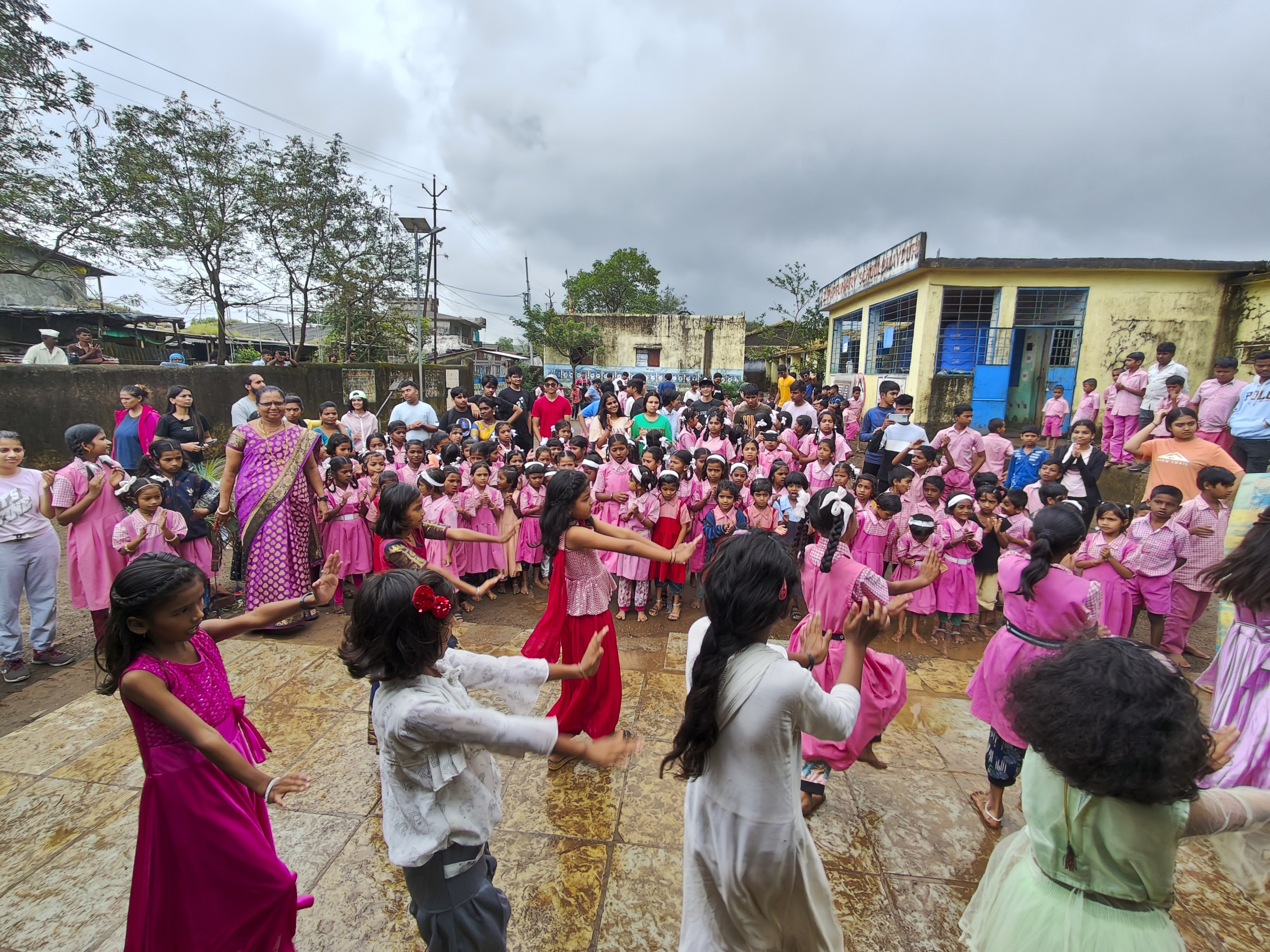
Going on a CAS (Creativity, Activity, Service) journey to Igatpuri included experiencing tracking through mountains , engaging with the local school,and contributing towards the conservation of the environment by cleaning a dam.This journey was accompanied by my friends.
LO2 – Demonstrate that challenges have been undertaken, developing new skills
This learning outcome involved the challenge of tracking through the mountain of Igatpuri. The reason for the tracking to be challenging was the weather as it was a monsoon season the land was muddy and the rocks were slippery so it was hard to get a good grip. This cause me to slipp often while climbing also there were sudden rain which made it even more physically challenging. Through this experience I learned more about tracking which will help me in future if I go for tracking.
LO3 – Initiate and plan
Visiting the local school was where the planning was required, we were given the task to plan activities for the kids which included interactive games. The reason this task was difficult was due to the location and the resources we had. As here was not enough space and enough resources we had to plan accordingly.
LO6 – Engagement with issues of global significance.
The 2 global issue that I witnessed were cleanliness and quality education. Cleanliness was witnessed when we want to the dam which was visited by many tourists, we cleaned that place. The quality education was witnessed when we visited the local school, the children were provided the basic education.
LO7 – Recognise and Consider the Ethics of Choices and Actions
cleaning the Igatpuri dam, which had accumulated significant waste, largely plastic. As we began, I couldn’t help but reflect on the sheer amount of waste carelessly discarded, contributing to environmental degradation. The ethical responsibility of preserving natural resources hit home as we worked to restore the dam to a cleaner state.
This experience made me realize how easy it is to overlook our impact on the environment in daily life. It felt rewarding to know we were contributing to a healthier ecosystem, but it also came with the understanding that our efforts were just a small step in addressing a larger, ongoing issue. The ethical dilemma here is that while we were helping in the short term, more systemic changes are needed to prevent such waste accumulation in the first place.
To conclude, I developed lots of skill. For instance communication I developed it when we visited the school where children studying used different language to communicate than us so it was a difficult task to talk to them however I was able to communicate to them. The second skill I developed was group working as when we had to plan activity for the children in school, we were divided into groups where we work together for planning and then executing those activity.
To conclude, I developed lots of skill. For instance communication I developed it when we visited the school where children studying used different language to communicate than us so it was a difficult task to talk to them however I was able to communicate to them. The second skill I developed was group working as when we had to plan activity for the children in school, we were divided into groups where we work together for planning and then executing those activity.


