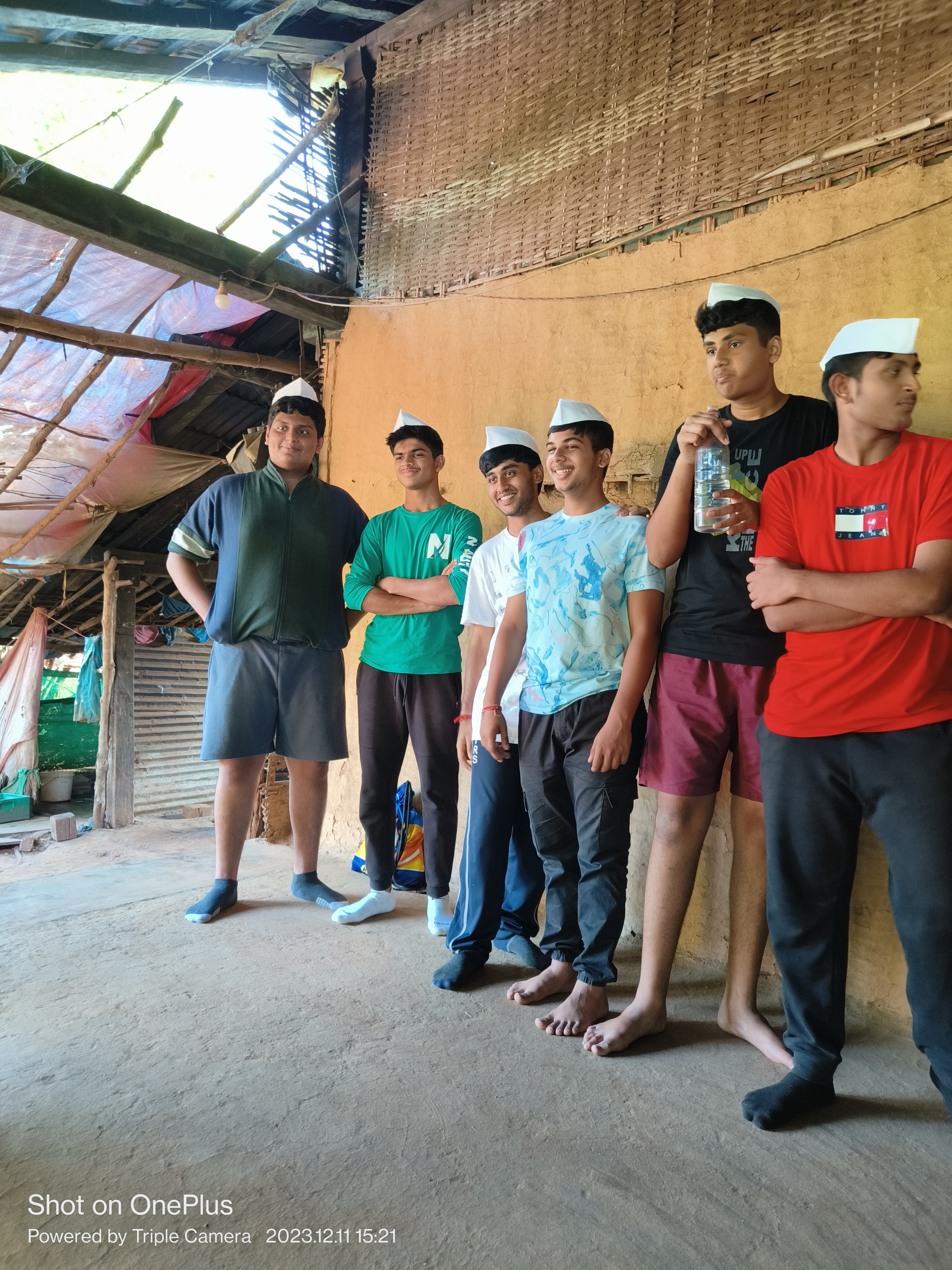
For our CAS trip I went to Mokamal Dang along with my friends from Sagacity and Sapience. It was a 6 day, 5 night trip. The goal of the trip was to explore and learn about tribal life, the way in which they earn, educate and survive. Also, it intended us to stay at a place which is out of our comfort zone. From the very first day we started trying things which we never did in our life: farming, de-husking of rice, weaving, welding, etc.
LO1 – Identify your own strengths and develop areas for growth
When it comes to strengths, there were two major strengths that I discovered during this trip. Once the trip began, I constantly noticed that many of the students were having several problems when it came to food. Unlike them I had no worries in completing or complaining about the food that was provided. In fact when we visited their school and served them lunch, I sat on the floor beside them and ate with them without any spoons or forks. So there I realized that adjusting and staying a bit out of my comfort zone wasn’t an issue for me. Secondly, when we had small walks and treks I had no issue in doing them due to my fitness level. I can safely say that my fitness and endurance was my strength here as I had no issue walking or going on treks and I rather enjoyed them. Apart from these strengths, the area that I need to work on is socializing. On the trip I realized that I only had 2-3 of my close friends and others were the one with whom I did not talk much, so during some instances I got bored. However, if I had that socializing skill then I wouldn’t have gotten bored, so that is one area where I need to work upon.
LO4 – Show commitment and perseverance in CAS experience
I feel that I managed to fulfill this learning outcome throughout the trip. There are many instances where I portrayed it during the trip. The instances where I showcased was this learning outcome was during day one when we learnt and tried cutting crops, on the same day I even tried de-husking of rice in the tribe’s house. The next day I showed commitment as I was eager to learn about the hospital and governmental methodologies followed in Dang and the methodologies followed in the milk chilling factory to help the tribes earn. On day 3 I explored and learned about the local bazaar “Haat” that was held in the village itself. Again, on that day I curiously learned about the marriage and caste system that was followed within the tribes of the village. As it comes to my notice, major commitment was shown when we visited the local school. I was genuinely involved in playing with the kids in the school and teaching them new sports such as Kho-Kho, Football, Frisbee, etc. In no way I felt that I was forced to do so and I was personally engaged in doing various tasks in the school such as attending their classes with them, playing with them, and eating lunch with them as well.
LO5 – Demonstrate skills and benefits of working collaboratively.
Collaborative skills were showcased by me and my friends when we took charge of learning and performing welding. We showcased collaboratively as we helped each other carry pillars of steel from one place to another, take measurements of the pillar and the metal wire, to cut the pillar and metal wire precisely, and while using complex tools attach the metal wire across the pillars. Collaborativity was also showcased during farming. We mindfully used the help of each and communicated properly as one cut the rice crop and passed it to the other person who carried it to an empty space. We also collaboratively divided tasks within each other during both welding and farming so that no quarrels took place and even the work was done efficiently.
LO6 – Engagement with issues of global significance
During this trip, I noticed and engaged with 3 main global issues that are Poverty, Hunger, and Quality Education. When we visited the local schools and houses of Dang, we noticed that many of the kids were dirty, dusty, and malnourished. We also got to know from our guide that the children in Dang did not have dark black hair due to deficiency of several vitamins. When we made lunch and served it to them, they had wide smiles on their face and they told us that this food was way better than what they daily have, when we only cooked normal food for them and nothing very special. The economic condition there was very weak because most of the children were not currently living with their parents as they went to sugarcane farms to earn money there so the kids stayed at an NGO near the school. The NGO did not have proper rooms and kitchen, in fact it did not even have a toilet. The kids were supposed to use the outdoors for that. Regardless of the children regularly attending the school, we noticed that they did not have enough resources for their studies. So we took the initiative to buy basic stationary and donate it to them.
LO 7 – Recognize and consider the ethics of choices and actions
Coditions in Mokhamal were very different than what we experience on a daily basis. We were there to learn about the living conditions, their ways of earning, their ways of survival, etc. so we had to be very mindful of our actions and had to make mindful actions that did not offend the people or make them feel different from us in any ways. In several instances I made ethical choices of being open-minded when we visited places such as house of tribes, the local market, and the milk chiling factory. Crucial decision of making efforts to learn about the different methodologies of the tribe and not acting unintrested helped me learn something new and avoided the hazard of offending them.
To conclude, I’d like to say that I learnt several things from this trip which are going to help me throughout my life. And I probably wouldn’t have learnt them if I had not gone on this trip. It taught me new skills such as social skills and made me realize that we should always give back when we are blessed with a lot of things. I also learned that we should be grateful with what we have and should stop complaining for what we don’t.