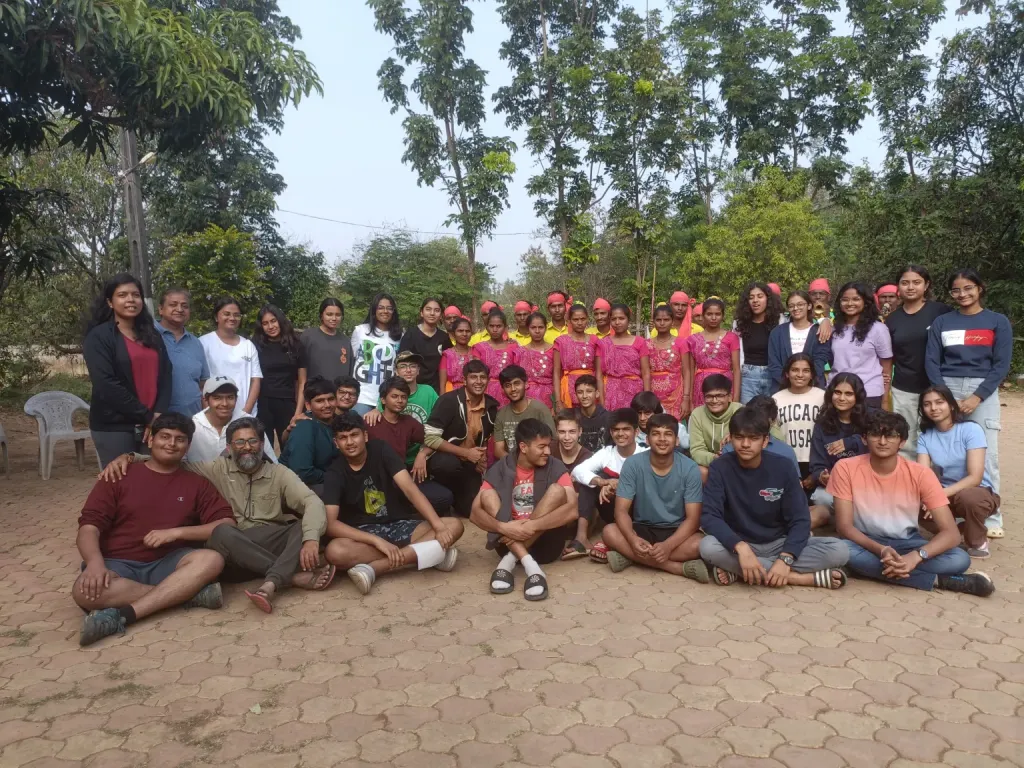
Our rural immersion trip took us to Mokhamal, a village in Dang, Gujarat, where we had the opportunity to experience the essence of rural life and learn about the lifestyle of local tribes. The purpose of the journey was to explore various aspects of village life, such as their sources of income, living conditions, agricultural practices, and culture. We visited tribal homes, a milking factory, farms, and stunning waterfalls. Additionally, we participated in cultural activities like Warli painting, basket weaving, and watching a traditional Dangi tribal dance. The trip was both insightful and enriching, offering a deeper understanding of rural life.
LO2: Demonstrate Challenges and Develop New Skills: One of the major challenges during the trip was managing a packed schedule that involved various activities with the tribes, including farming, communicating, and trekking. Farming was a completely new experience for me, and I learned how to cut dried crops and tie them using the crops themselves. Another significant challenge was the language barrier, as the tribes spoke Dangi, a language unfamiliar to me. Communicating effectively was initially difficult, but I gradually improved my communication skills by trying to understand Dangi, which I realized shares some similarities with Gujarati.
LO4: Show Commitment and Perseverance in CAS Experiences
Participating in farming activities, such as cutting dried crops and tying them using natural materials, was physically challenging. It required persistence to adapt to the labor-intensive nature of rural agricultural practices, which were vastly different from my usual experiences. The treks, including a night trek, demanded physical stamina and mental resilience. Traversing uneven terrain, especially at night, tested my ability to push through discomfort and stay focused.
LO6: Engagement with Global Issues: The trip provided a firsthand perspective on global issues such as poverty, lack of education, and inadequate sanitation. While I had studied these issues in school, witnessing them in real life was a powerful experience. It underscored the urgent need to address these challenges and ensure equitable access to essential resources like education and sanitation for all.
LO7: Consider the Ethics of Choices and Actions: During the trip, we made a thoughtful contribution by donating books, clothes, and stationery to a local school. Seeing the children’s situation during our visit left a profound impact on us. Although their basic needs were being met, they still faced numerous challenges. This inspired us to take action and provide resources to help support their education and improve their lives.
Conclusion : This trip to Mokhamal was an unforgettable experience that offered valuable insights into the lives of tribal communities. I enhanced my communication skills by interacting with the tribes and gaining a better understanding of their daily lives. One of the highlights of the trip was the night trek, which added a sense of adventure to an already enriching experience.