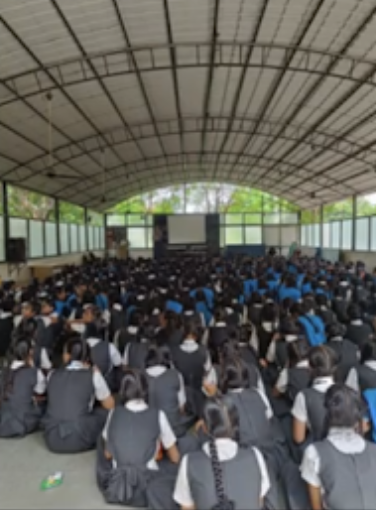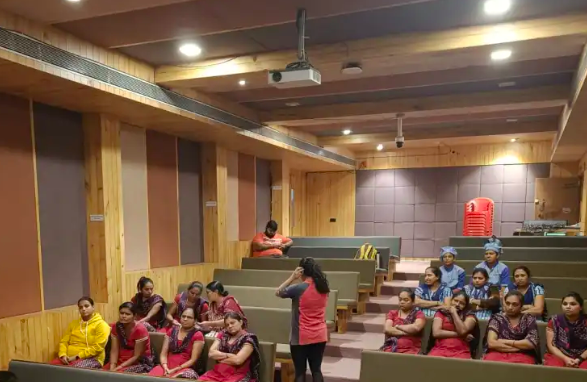
I find it quite upsetting that the impoverished disregard proper menstruation hygiene. I participated in a Menstrual Awareness Project to try to fight this major social issue. In order to gain knowledge from these professionals and have a greater influence on menstrual awareness, we partnered with Kamakhya, a reputable NGO. After attending mentor-led workshops at first from Kamakhya, we ran our own sessions with didis( female school staff) from our school.
LO2: Demonstrate that challenges have been undertaken, developing new skills in the process.
A menstrual hygiene awareness session is an opportunity for students to address a critical social issue while developing essential skills. Organizing such a session involves researching health topics, planning educational activities, and engaging with peers or communities. This aligns with the IBDP CAS learning outcome “Demonstrate that challenges have been undertaken, developing new skills in the process,” as students must navigate cultural taboos, communicate sensitive information effectively, and possibly collaborate with experts. Overcoming these challenges enhances their problem-solving, leadership, and empathy, fostering both personal growth and a positive impact on public health and gender equality in their community.
LO 3: Demonstrate how to initiate and plan a CAS experience
The Menstrual Awareness Project taught me the value of initiative and careful planning. The first step was to determine the main problems related to menstruation hygiene in impoverished communities. Working together with Kamakhya, we created a disciplined training programme with the goal of educating ourselves before assuming the role of educating others. In order to properly engage our audience during this phase, we had to establish clear objectives, lay out the instructional material, and create interactive techniques. The planning phase made clear how important it is to be flexible and well-prepared in order to guarantee the project’s success.
LO 6:Demonstrate engagement with issues of global significance.
Millions of women and girls worldwide struggle with menstrual hygiene, which can have negative effects on their health, their ability to learn, and their social standing. I gained direct exposure to a topic of global importance by concentrating on this project, learning about its complexity and the ongoing fight for menstrual equity. My viewpoint was widened by this event, which brought to light the ways in which local efforts might aid in tackling global issues. It gave me more confidence to continue my advocacy for menstrual hygiene outside of the project and gave me a stronger sense of obligation to do so.
Finally, I would want to say that the Menstrual Awareness Project helped me grow personally in addition to addressing a pressing issue. I’ve become more knowledgeable, sympathetic, and driven to change the world via introspection, teamwork, and a dedication to global concerns. This trip has strengthened my conviction that education can be a powerful instrument for change and empowerment, inspiring me to take on new projects that help create a more just and informed society.