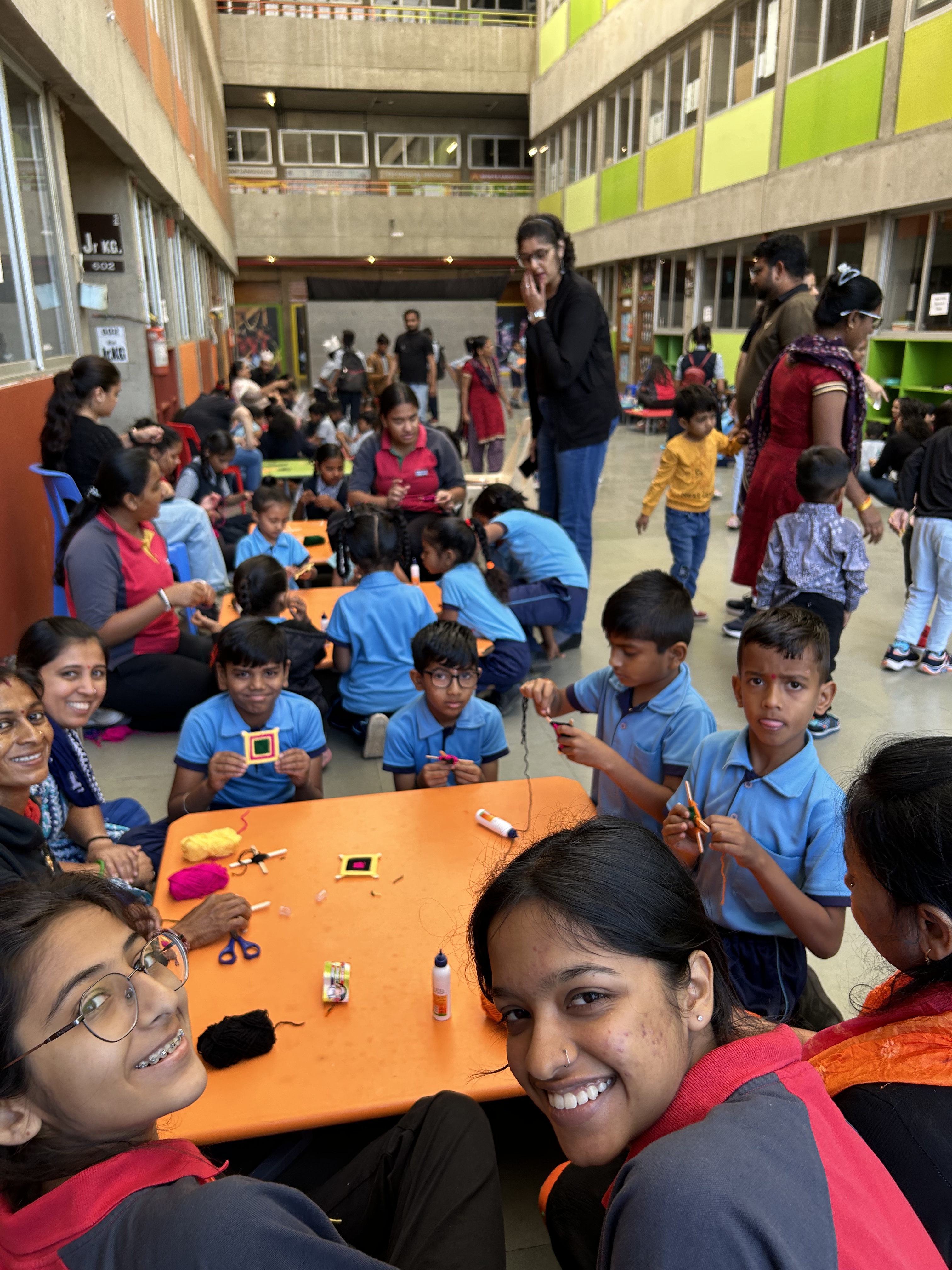
Bal Mela is an event repleted with numerous fun and creative stalls, managed by the fs students, it is an event that is attended by students from the local school government. The event comprises of activities like; dance, yarn weaving, paper crafts, etc. The students show keen interest in learning these activities through the student volunteers, involving interactions, conversations and a learning environment.
LO- 1 Identify own strengths and develop areas for growth
During the event, I realised of a lot of things like my communication skills, my ability to learn the process of making the yarn wall hanging along with its execution and explanation. Not only did I realise of my capabilities, I learnt a lot of things in the process; like, being able to organise, manage and arrange things in such a way that it does not create chaos and any obstruction in the flow of learning and that it also builds a environment for fun. However, every learning experience comes with areas for growth and development; similarly, realised that there were so many areas that I had to work upon like; being able to lead, being able to come up with new ideas instead of learning what’s been already decided and execute that. Perhaps if I would have decided on a pre existing model, we would have given students the option to decide which one they’d like to make instead of imposing them with only one option, however, the entire experience was very fun and nonetheless, students showed a lot of enthusiasm, interest and fun while learning how to make the yarn wall hanging.
LO2 – Demonstrate that challenges have been undertaken, developing new skills.
Bal Mela attracted numerous students eager to explore various creative activities. However, the event encountered several hurdles. Firstly, time constraints posed a significant challenge, exacerbated by a shortage of stalls and FS student volunteers. This shortage led to chaos, making it arduous for volunteers to manage the large amount of students. Despite these difficulties, our team took on the challenge of organization and management, striving to ensure a smooth experience for all participants. Despite our efforts, many students were unable to complete their work within the event’s timeframe. To address this, we provided them with yarn and guided them in creating their desired pieces. Additionally, we offered some of our demonstration pieces to those who wished to continue their projects at home. Witnessing the joy and satisfaction on their faces brought me immense gratification. I vividly recall one instance where I personally handed over one of my wall hanging to a student who expressed a desire to take it home. Seeing the delight on her face filled me with a sense of fulfillment.
LO3: Initiate and plan a CAS experience.
As part of Bal Mela, we had the opportunity to host children from local community schools and introduce them to the art of macrame. I took the initiative to plan and design the activities, ensuring that we taught them simple yet beautiful designs like keychains and dream catchers.
The preparation involved selecting patterns that were both visually appealing and easy to grasp. I carefully curated designs that required minimal materials but still allowed the children to explore their creativity. Before the event, I practiced each design multiple times to ensure that I could guide them efficiently.
On the day of the fest, we formed small groups, creating an engaging and interactive environment. Step by step, I demonstrated the knots and patterns, offering individual attention to help them perfect their work. It was incredible to see their enthusiasm and determination as they transformed simple threads into intricate designs.
Seeing their joy and pride in their creations made all the planning worthwhile. The activity not only introduced them to a new craft but also instilled patience and creativity. It was a rewarding experience that reinforced the power of art in bringing communities together.
LO-5 Demonstrate skills and benefits of working collaboratively.
Earlier, I mentioned how tough it was for our group to sort everything out because we were pressed for time. Many students were keen on learning how to make wall hangings. But thanks to teamwork and group efforts, the job became easier. We split our group of 6 into three tables with two student volunteer each, which allowed us to accommodate the eager learners and divide the school students into smaller groups for better tutoring. Though it wasn’t all rainbows and sunshine, collaborating made it feasible. Without it, we would’ve struggled to decide who teaches what and to manage our time alongside teaching. The whole shebang showed that teamwork is crucial for smooth sailing and keeping things on track.
By sharing our creations and knowledge, we aimed to spread happiness and foster a sense of accomplishment among the participants. Despite the challenges we faced, the Bal Mela served as a platform for students to explore their creativity and learn new skills, leaving a lasting impact on all involved.
LO7: Recognise and consider the ethics of choices and actions.
When organizing the macrame workshop for community school children, I was mindful of ethical considerations to ensure an inclusive and respectful experience. One key aspect was creating a welcoming environment where every child felt valued, regardless of their skill level. I carefully chose designs that were simple yet engaging, ensuring accessibility for all participants.
Additionally, I was conscious of the language and instructions used, making sure they were clear and encouraging rather than intimidating. I also made it a priority to respect their creative expressions, allowing them to experiment with colors and patterns rather than enforcing rigid guidelines.
Sustainability was another ethical aspect I considered. We used eco-friendly materials wherever possible, promoting awareness of responsible crafting. Furthermore, I ensured that all materials were provided equitably so that every child had an equal opportunity to participate.
By fostering a positive and ethical learning space, the workshop became more than just an art activity—it became a moment of empowerment and joy for the children.