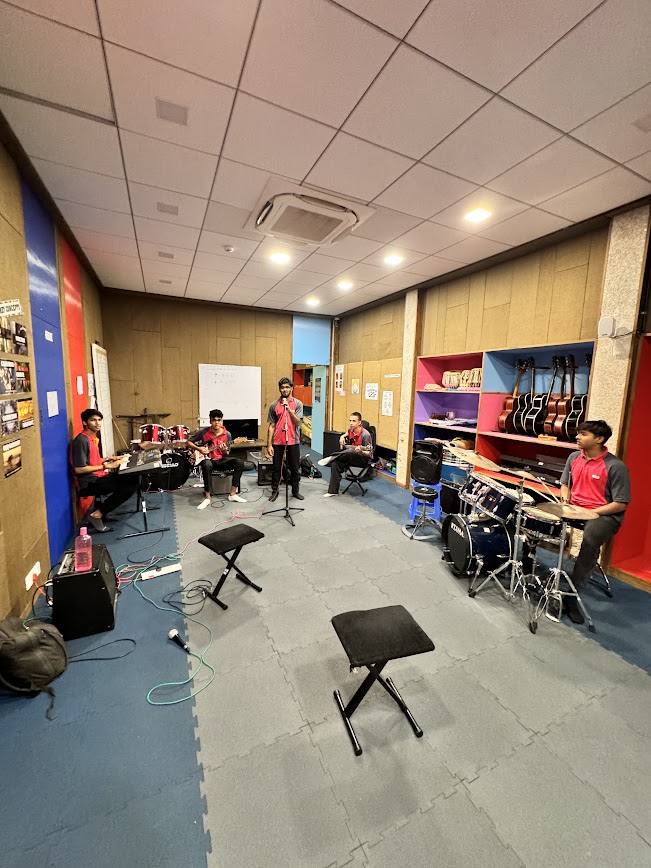
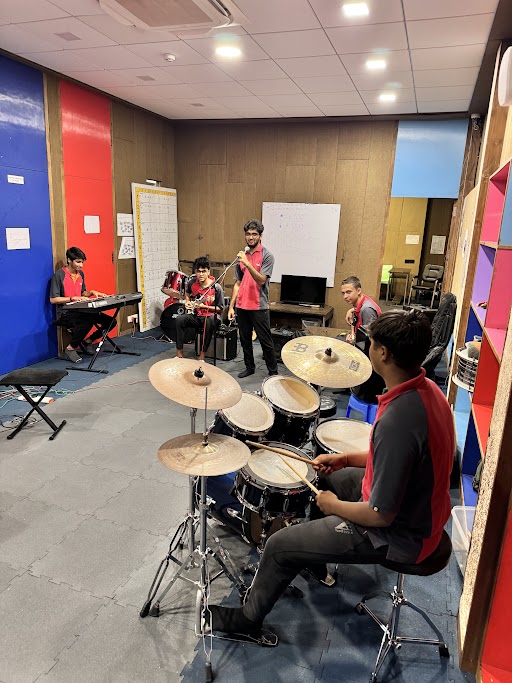
Man, drums have been like my heartbeat ever since I was a scrawny kid in 3rd grade. Walking into Niklesh sir’s class was like stepping into a rock concert – minus the screaming fans (thankfully!). His love for drumming was like a force field, pulling you in and making you want to grab some sticks and flail around. Under his wing, I started banging away, totally hooked on the simple joy of making those bad boys boom.
Remember those first beats? Like finally cracking a code – that satisfying “whack” of the stick hitting the drum just right. It wasn’t just the sound, though. There was this weird sense of connection with the other drummers too, like we were all part of the same secret rhythm club. Niklesh sir made sure it was a fun zone, a place where messing up was just a stepping stone to getting it right. He was always there, cheering us on and pushing us to reach further.
Fast forward a bunch of years, and those basic beats turned into these crazy, intricate patterns that flowed from my hands like second nature. I learned to control the sound, make it soft and sneaky or loud and in-your-face, depending on the mood. Niklesh sir wouldn’t let me get too comfy, though. He kept throwing new challenges my way, different styles and rhythms that made my brain do flips. It was hard, sure, but totally worth it.
Then came TARANG, the school’s big shindig. My stomach was doing somersaults as I sat down behind the drum kit, the spotlight hot on my face. The first notes of “Cloud No. 9” hit the air, and everything else just… faded away. All those hours of practice, all the sweat and frustration, poured out through my sticks. Each beat told a story, the driving rhythm taking us higher and higher, the fills capturing those little moments of pure joy, and the crescendos… well, those were all about reaching that ultimate “cloud nine” feeling.
The applause that roared afterwards was like a giant high five. It wasn’t just about how well I played, it was about the whole journey – the late nights practicing, the sore arms from all that drumming, the feeling of accomplishment when I finally nailed a tricky part. It was pure magic, and it made me realize that drumming isn’t just a hobby, it’s a part of who I am. And with every beat of my heart, I know this journey will keep on rolling.
LO 1: Identify own strengths and develop areas for growth
Understanding my strengths and weaknesses has been an eye-opening journey for me. It’s given me a deeper sense of self-awareness, allowing me to appreciate my talents while acknowledging areas where I can improve. This self-awareness has been empowering, shaping my approach to personal and professional development. Recognizing my strengths has boosted my confidence, enabling me to leverage them effectively in various endeavors. On the other hand, being aware of my weaknesses has motivated me to work on them diligently. For instance, I’ve actively pursued opportunities to improve my public speaking skills, recognizing their importance in both academic and professional settings. Overcoming this weakness would have significantly benefited me, opening doors to better communication and leadership opportunities.
LO 2: Demonstrate that challenges have been undertaken, developing new skills in the process
Undertaking challenges has been instrumental in my personal growth journey. One particularly memorable experience was organizing a charity event from scratch. The challenge lay not only in the logistics of planning but also in rallying support from the community. It tested my organizational skills, time management, and ability to navigate unforeseen obstacles. While I hadn’t tackled a similar project before, I drew upon my past experiences in leadership and teamwork to navigate through the complexities. Overcoming this challenge filled me with a profound sense of achievement and bolstered my confidence in my ability to tackle daunting tasks. Undertaking new challenges is essential to me because it pushes me out of my comfort zone, fosters resilience, and cultivates valuable skills that I can apply in various aspects of my life.
LO 3: Demonstrate how to initiate and plan a CAS experience
Initiating and planning a CAS experience was both exhilarating and challenging for me. Organizing myself involved creating detailed timelines, setting objectives, and delegating tasks effectively. While I consider myself relatively organized, the real challenge lay in initiating the activity itself. Convincing others to participate and securing resources required a considerable amount of effort and persuasion. Planning came more naturally to me, as I enjoy strategizing and organizing details. However, the process of initiation taught me valuable lessons in communication, negotiation, and adaptability. Moving forward, I believe planning and initiating activities will become more manageable for me, armed with the experience and insights gained from this endeavor. Understanding how to plan and initiate activities is crucial not only for achieving success but also for fostering collaboration, leadership, and effective time management skills, which are invaluable in any endeavor.