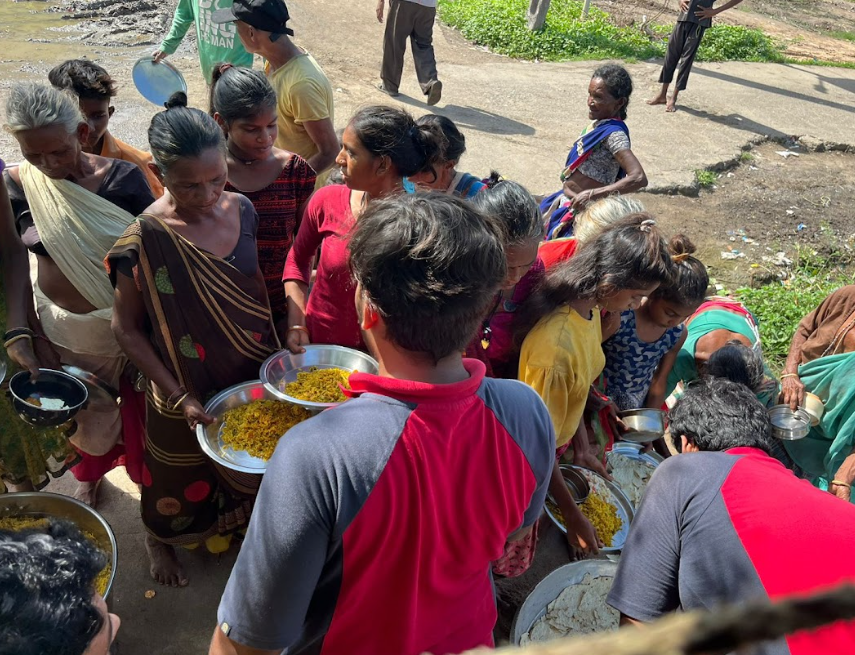
During the food donation drive, I cooperated with some of my group members to donate food to members of a particular community in the city. We visited their apartments on 6 different sundays. The conventional meals consisted of all the required elements for a nutritious meal. Further through awareness creation programs, we educated children regarding their basic curriculum. Since the drive was an hour long, before serving them food, our team educated the children. As a strategy to increase their effectiveness while studying, we decided to keep the food as a reward for studying. In our first orientation meeting we were familiarised by the lifestyle of the people living in the community and accordingly planned the activities for the children. At the ending of each session we asked the children to arrange themselves, and requested them to cooperate with us for easing the process of food distribution.
LO1: Identify own strengths and develop areas for growth
Through this experience, I recognized my strengths in leadership and communication, especially in educating children and organizing the activities. However, I also identified areas for growth, such as being more patient and adaptable when working with children from different backgrounds.
LO2: Demonstrate that challenges have been undertaken, developing new skills in the process
One challenge we faced was ensuring that the children remained engaged in the learning sessions before the food was served. This required us to find creative ways to motivate them. Through this, I developed better teaching strategies and learned how to keep the sessions both informative and fun.
LO3: Initiating and Planning a CAS Experience
In the first orientation meeting, we planned the structure of each session, taking into account the community’s lifestyle and needs. I played an active role in organizing the curriculum and scheduling visits. This taught me the importance of careful planning and adaptability when working in unfamiliar environments.
LO4: Show commitment to and perseverance in CAS experiences
Despite the weekly commitment and challenges of maintaining consistency in the children’s engagement, I continued to visit the community every Sunday. Our team remained dedicated to providing nutritious meals and educational support, and I learned to persevere even when faced with logistical or motivational hurdles.
LO5: Demonstrate the skills and recognize the benefits of working collaboratively
By working closely with my group members, we were able to divide tasks effectively, coordinate food distribution, and ensure that educational programs ran smoothly. The collaboration allowed us to create a supportive and efficient system, benefiting both the children and the community.
L6(Engagement with issues of global significance)
Food Donation was a service activity for me, where I visited a less-developed part of the city, and I donated food to an entire community of unprivileged children who were deprived of basic needs. The food consisted of a proper 1 time meal. Through this I aimed at the SDG of zero hunger.
L7(Recognise and consider the ethics of choices and actions)
Since my service was was ethical and was aimed at resolving a social cause I had to consider impacts of choices and actions. I understood that these actions were extremely important for the children whom we supported, and it was the best action we could have taken.
In conclusion, I was able to pinpoint my strengths as a mentor and instructor as well as my areas for growth, including my patience, empathy, and cultural sensitivity. By developing trusting relationships, which are necessary for meaningful learning experiences, I was able to get used to each child’s individual requirements and backgrounds.