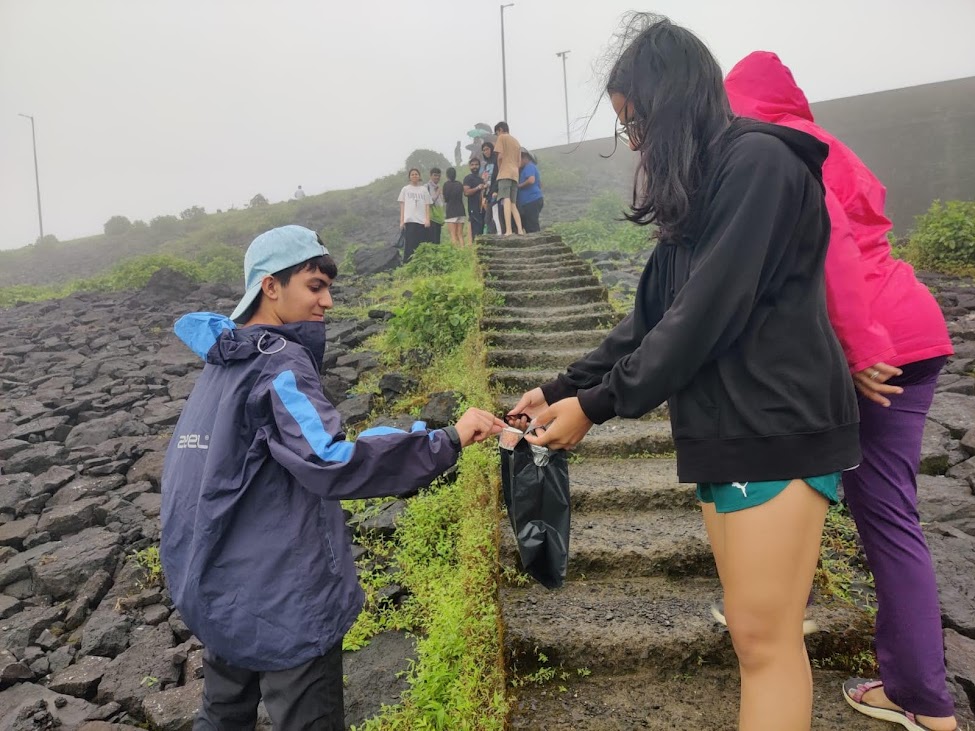
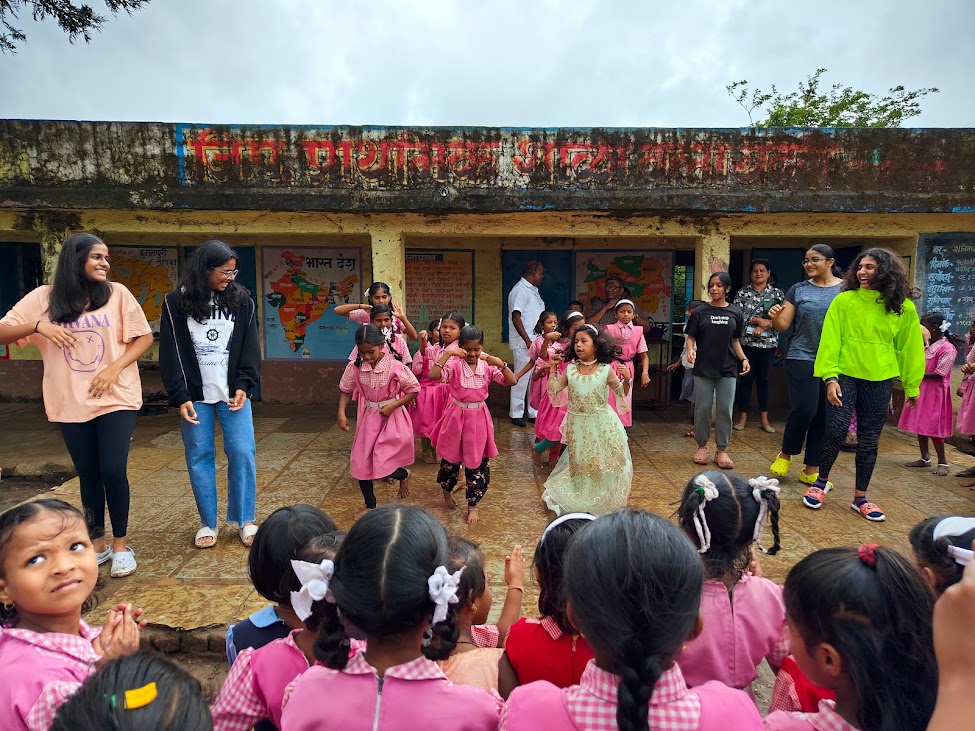
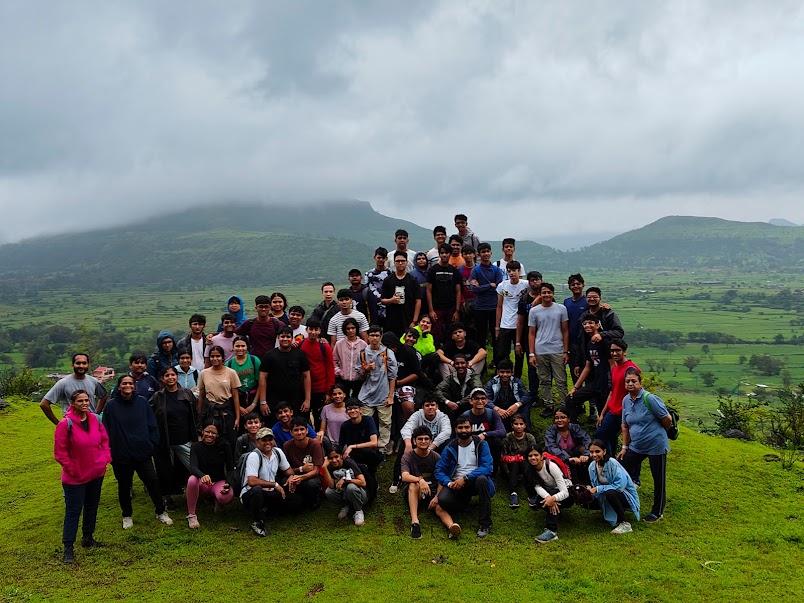
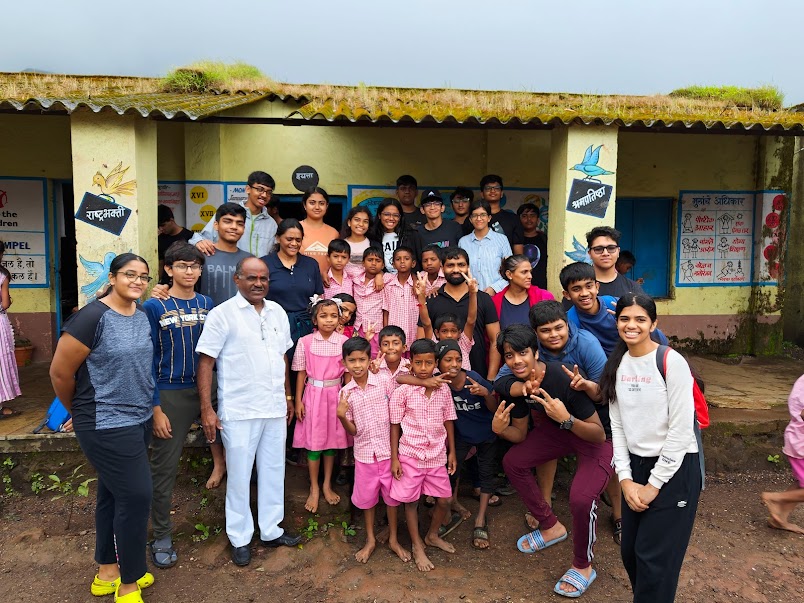
Our three-day journey to Igatpuri from September 15 to September 17 was an immersive experience filled with treks, local activities, and engaging with the community. We returned not only physically tired but enriched with new perspectives and insights. On our stay there we visited a nearby village where we interacted with the locals, learning about their lifestyle, education, income, festivals, and food. We also visited a school in the village, played with the children there and painted walls. An afternoon was spent cleaning a dam, highlighting the importance of environmental conservation.
LO1 – Identify own strengths and develop areas for growth
This trip revealed new aspects of my character. I discovered my strength in empathy and compassion, particularly when interacting with the village children and locals. It was easy for me to understand and show care when talking about life challenges with the locals. However, I also realized my need for developing patience, especially during activities like basket weaving and trekking, which required a calm and steady approach.
LO2 – Demonstrate that challenges have been undertaken, developing new skills
The challenges we faced were both physical and mental. Trekking through rough terrain, engaging in local activities like basket weaving, and contributing to dam cleaning were all new experiences that developed our resilience and problem-solving skills. These activities were not just about learning new skills but also about understanding the significance of these tasks in the local context and their impacts.
LO4 – Show perseverance and commitment in CAS experience
Perseverance was key throughout the trip. The physical demands of trekking and engaging in continuous activities tested our endurance. Despite fatigue, we remained committed to fully experiencing each planned activity, pushing ourselves to participate and learn, allowing us to stay committed.
LO5 – Demonstrate skills and benefits of working collaboratively
The success of our trip was largely due to our collaborative efforts. Whether it was during treks, local activities, or environmental conservation tasks, working together made the experience more manageable and enjoyable. We learned to rely on each other, share responsibilities, and support one another, strengthening our teamwork skills.
LO6 – Engagement with issues of global significance
Our visit to the village and the dam cleaning activity highlighted significant global issues such as poverty, education, and environmental conservation. Understanding the local lifestyle and challenges faced by the community emphasized the importance of addressing these global issues at a grassroots level. This experience reinforced our responsibility to contribute to solutions for these pressing problems.
LO7 – Recognize and consider the ethics of choices and actions
Throughout the trip, we were conscious of the ethical implications of our actions. From respecting the local culture and environment to engaging thoughtfully with the community, we aimed to make ethical choices. Donating school supplies and participating in environmental conservation were small steps towards making a positive impact, reflecting our commitment to ethical actions.
This trip to Igatpuri was a profound journey of self-discovery, learning, and growth. It reminded me of the importance of empathy, collaboration, and ethical responsibility. As we return to our daily lives, these lessons will continue to guide our actions and choices, fostering a more compassionate and aware perspective. Below are the pictures from the trip.