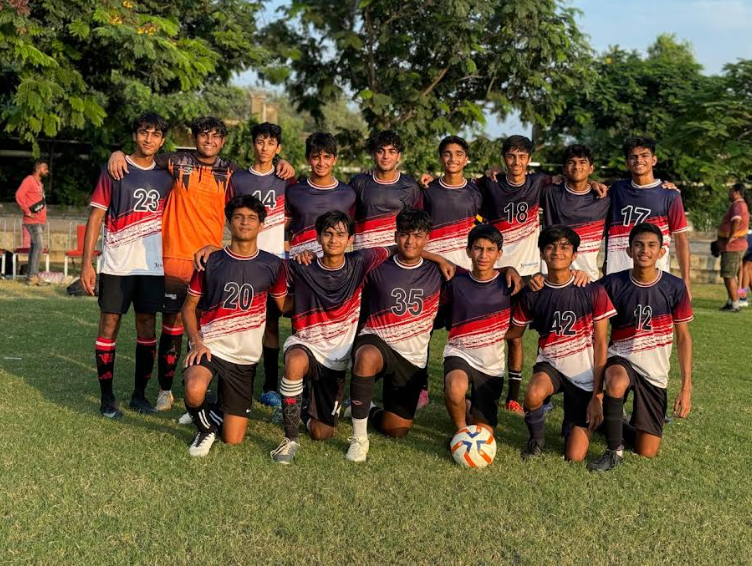
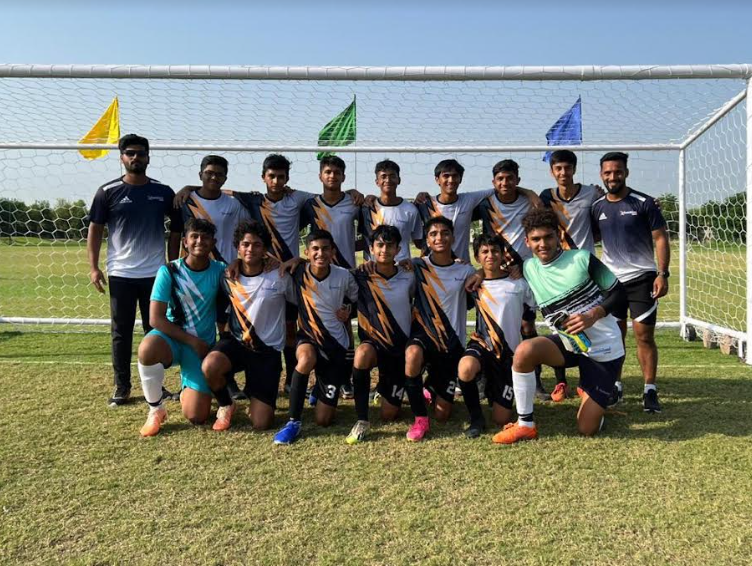
Participating in the ISSO Football Tournament was one of the most challenging and rewarding CAS experiences I have undertaken. I was selected to represent my school in both the Under-17 and Under-19 categories, which required a high level of commitment and teamwork. I demonstrated Activity out of the three strands of CAS (Creativity, Activity, Service).
Learning Outcome 1 – Identify own strengths and develop areas for growth:
Competing in the ISSO football tournament allowed me to assess my strengths as a football player. I realized that my speed and ability to read the game were key assets that helped me make quick decisions and assist my team in creating scoring opportunities. However, I also recognized areas for growth, such as improving my stamina for longer matches and refining my passing accuracy under pressure. This self-reflection was crucial as it gave me clarity on what I could improve in future games, both during training and on the field.
Learning Outcome 2 – Demonstrate that challenges have been undertaken, developing new skills:
The tournament posed multiple challenges, especially playing against strong teams from other schools. I had to adapt quickly to different playing styles, which required developing new tactical and technical skills. Facing these opponents pushed me to sharpen my defensive and offensive strategies, learning to remain calm under pressure. Additionally, managing the physical toll of playing back-to-back matches required mental resilience. Despite the physical and emotional exhaustion, I managed to push through, learning new strategies from both victory and defeat, which made me a more adaptable and well-rounded player.
Learning Outcome 4 – Show perseverance and commitment in CAS experience:
One of the most testing moments of the tournament came when I injured my groin after the second match. Even though I was advised to rest, I felt committed to my team and played through the injury in the third match. The pain was intense, but I managed to complete the match and contribute to the team’s performance. This experience tested my endurance, and though it was difficult, it strengthened my resolve and commitment to my teammates. However, by the time of the fourth match, the injury had worsened, and I could not play, marking an important turning point in my experience (which connects to Learning Outcome 7).
Learning Outcome 5 – Demonstrate skills and benefits of working collaboratively:
Football is inherently a team sport, and our success depended on how well we collaborated both on and off the field. Throughout the tournament, our team worked together to develop strategies, motivate each other, and stay focused despite setbacks. We communicated effectively during matches, creating a strong bond that helped us overcome tough opponents. The importance of trust and coordination in teamwork became more apparent, as every player’s role contributed to the collective success. Working collaboratively helped me appreciate how much the team’s dynamics and cohesion impacted the outcome of the matches.
Learning Outcome 7 – Recognise and consider the ethics of choices and actions:
After playing through my groin injury in the third match, I faced a difficult ethical decision. As a key player for my team, I knew that sitting out the fourth match would significantly affect our chances, and ultimately, my absence contributed to the team’s loss. However, continuing to play would have risked worsening my injury, which could have had long-term consequences for my health. Reflecting on this, I realized the importance of making responsible decisions that balance personal well-being with team commitments. Ethically, I had to prioritize my health, even though it meant letting my team down in that critical moment. This decision highlighted the complexity of weighing personal and collective interests in sports and taught me the importance of self-care and accountability.