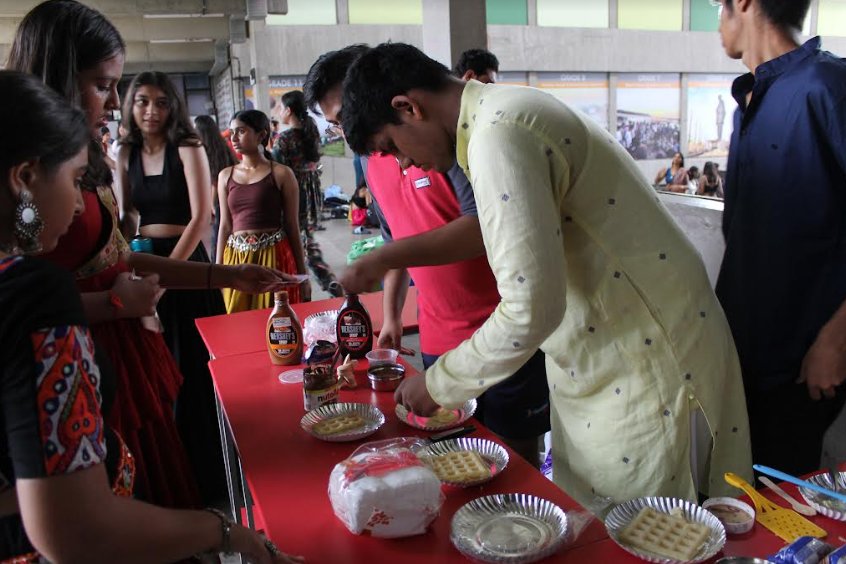
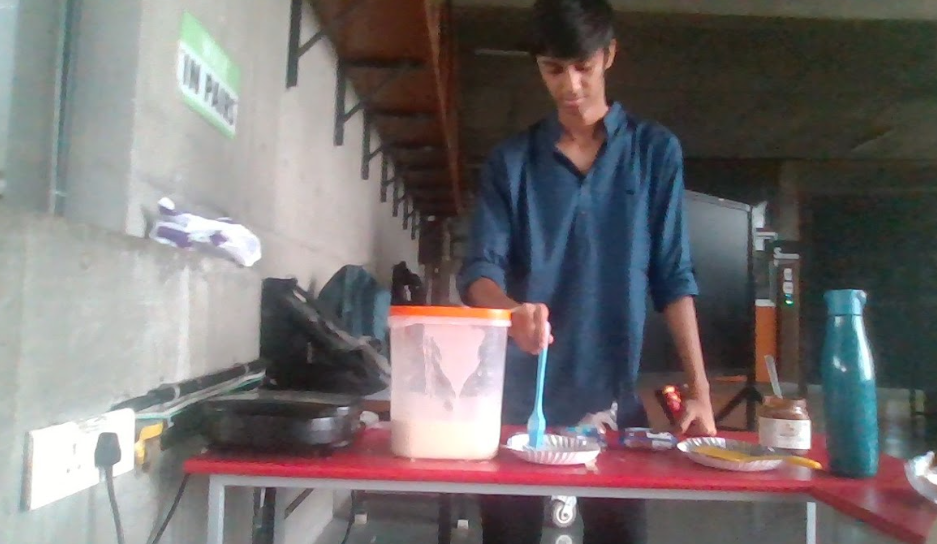
During the Garba Fest, my team and I organized a waffle stall to raise funds for charity. The goal was to not only enjoy the festival atmosphere but also use the opportunity to give back to the community. All the revenue generated from the sale of waffles was donated to a charitable cause. I demonstrated Service out of the three strands of CAS (Creativity, Activity, Service).
Learning Outcome 3 – Initiate and plan a CAS experience:
Organizing the waffle stall required significant planning and coordination. From sourcing ingredients to arranging cooking equipment, we had to ensure that everything was in place before the event. We carefully crafted a plan to make our stall efficient and appealing, choosing flavors that would attract customers and deciding on pricing strategies that would generate maximum revenue for our cause. Planning also involved considering how to manage the logistics of cooking and selling during the busy festival. This experience taught me the importance of thorough preparation and problem-solving, as we had to anticipate challenges, such as running out of supplies or handling large crowds.
Learning Outcome 5 – Demonstrate skills and benefits of working collaboratively:
Running the stall was truly a team effort. Each member of the group had specific tasks, from preparing and cooking the waffles to taking orders and handling finances. Communication was key to ensuring smooth operations, especially when the crowd grew large. We rotated responsibilities to ensure everyone had a chance to contribute and to avoid burnout. Working together in this high-pressure environment highlighted the importance of trust and coordination. Our collective effort not only made the stall a success but also reinforced the power of teamwork in achieving a common goal.
Learning Outcome 6 – Engagement with issues of global significance:
The proceeds from our waffle sales were donated to charity, directly addressing the issue of poverty and hunger. This experience helped us connect with the broader global concern of food insecurity, a problem affecting millions of people worldwide. By raising funds, we contributed in a small but meaningful way to combating this issue. Engaging with such global challenges made us more aware of our privilege and the role we can play in supporting those in need, even through small, localized efforts like this one.
Learning Outcome 7 – Recognise and consider the ethics of choices and actions:
Throughout this project, we had to make ethical decisions regarding pricing, quality, and how we handled the revenue. We made sure the ingredients we used were of high quality and set fair prices for our products to ensure that we weren’t overcharging people just to increase profits. Additionally, the ethical dimension of donating the proceeds was a key aspect of our project. It reinforced the idea that our efforts were not just about personal gain but about giving back to the community. We were also mindful of food safety and hygiene practices, ensuring that the waffles were prepared and served in a clean environment to maintain the trust of our customers.