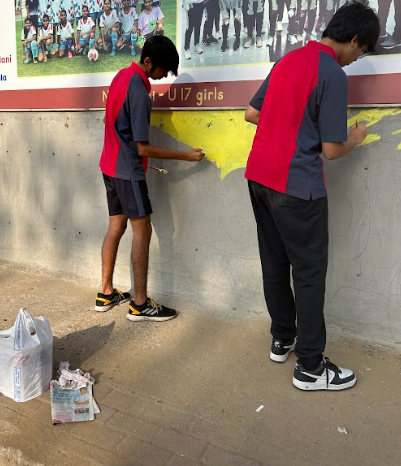
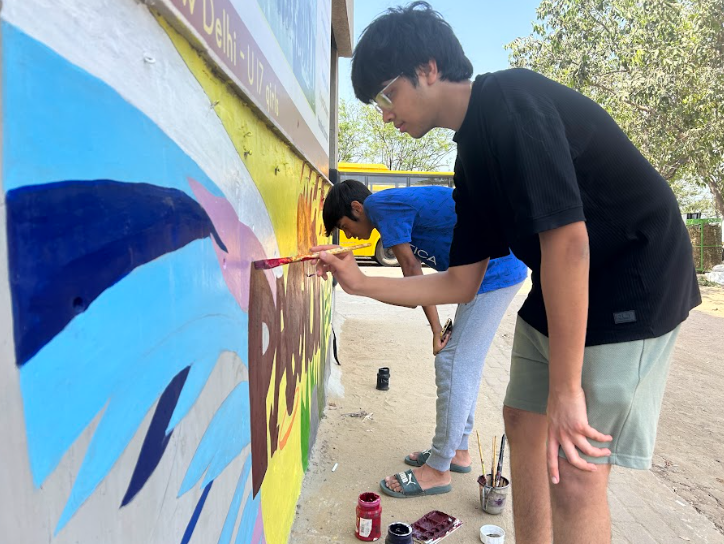
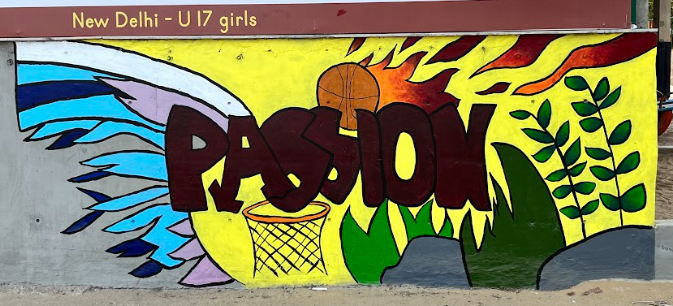
As part of our CAS project, my partner and I created a graffiti mural on the theme of “Sports” to raise awareness about the importance of an active lifestyle and motivate people to engage in sports. The goal was to inspire the local community to adopt healthier habits through visual art that was accessible to everyone. I demonstrated all the three strands of CAS (Creativity, Activity, Service).
Learning Outcome 1 – Identify own strengths and develop areas for growth:
Throughout this project, I recognized my strength in visualizing artistic concepts and translating them into large-scale designs. I was confident in my creative skills, particularly in sketching and conceptualizing the sports-themed elements. However, I identified an area for growth in managing the technical aspects of spray-painting on a large surface. Graffiti requires precision and control, which I had less experience with. Working on this project helped me improve my technique and develop new skills in using graffiti tools.
Learning Outcome 2 – Demonstrate that challenges have been undertaken, developing new skills:
One of the major challenges we faced was learning how to work with spray paints, which was a new medium for both me and my partner. Controlling the flow of paint and mastering shading techniques was difficult at first. Additionally, the large scale of the wall required us to adapt our artistic process, as we were more accustomed to working on smaller canvases. Overcoming these challenges helped us develop new technical skills, and by the end of the project, we felt much more confident using graffiti as an artistic tool.
Learning Outcome 3 – Initiate and plan a CAS experience:
Planning the graffiti project involved a lot of preparation and creative brainstorming. My partner and I developed several designs, incorporating different sports themes to make the mural engaging and dynamic. We created a central presentation to showcase our design process, including sketches, color schemes, and the message we wanted to convey about the importance of physical activity. This experience taught us how to organize a creative project from the ground up, considering both artistic elements and logistical details like obtaining permission to use the wall and gathering the necessary materials.
Learning Outcome 4 – Show perseverance and commitment in CAS experience:
One of the biggest challenges during this CAS experience was the weather. The wall we were painting on was located in an open area, and during the days we worked, the weather was extremely hot. Despite the discomfort and fatigue, we remained committed to finishing the mural. We took breaks to stay hydrated and pushed through the heat to complete the artwork on time. This experience reinforced the value of perseverance, especially when facing difficult conditions, and taught us that staying focused on the end goal is crucial.
Learning Outcome 5 – Demonstrate skills and benefits of working collaboratively:
This project was a team effort, and collaboration was essential to its success. My partner and I worked closely on every aspect of the project, from brainstorming the initial designs to executing the final mural. We divided tasks based on our strengths—while I focused more on the visual details and shading, my partner took charge of organizing the layout and background. Communication and teamwork were key, as we needed to ensure that both of our ideas were incorporated smoothly into the mural. Working together not only made the process more efficient but also enhanced the overall quality of the project.
Learning Outcome 6 – Engagement with issues of global significance:
The theme of our graffiti, “Sports and a Healthy Life,” connects to the global issue of promoting physical activity and well-being. Sedentary lifestyles and lack of physical activity are major contributors to global health problems such as obesity, heart disease, and diabetes. By creating this graffiti mural, we aimed to raise awareness in our local community about the importance of sports and an active lifestyle. This message is relevant worldwide, as physical fitness is essential for preventing health issues and promoting long-term well-being. Through this project, we contributed to a broader dialogue on the importance of health and fitness.
Planning and Process: