“Divyang” which is my NGO’s name meaning a divine body part, our prime minister said that persons with disabilities should no longer be referred to as disabled persons or viklang. The word viklang is Hindi for someone with non-functional body parts. They should now be referred to as divyang. Here I taught football to blind kids on 23rd Febura Sunday 8 am onwards. Through this experience, I developed essential leadership skills, tackled real-world challenges, and contributed to meaningful global issues. This reflection highlights my journey, the obstacles I faced, and the lessons I learned along the way.
LO1 – Identify own strengths and develop areas for growth.
Throughout my CAS journey with Divyang, I have identified my strengths and areas for growth. I realized that I possess strong leadership and organizational skills, which allowed me to coordinate multiple activities efficiently. However, I also recognized that I needed to improve my time management and budgeting skills, especially when handling large-scale projects. Managing volunteers and financial resources effectively was a challenge, but through this experience, I developed a greater sense of responsibility and
adaptability.
LO2 – Demonstrate that challenges have been undertaken, developing new skills.
One of the biggest challenges faced was to teach them basic skills because football as it is, is a tough sport and teaching them to blind students was even harder, however all the kids were really enthusiastic and eager to learn and were able to learn some of the basic skills that are important in football. Through this journey I learnt to be patient as I was needed while teaching.
LO3 – Initiate and plan a CAS experience.
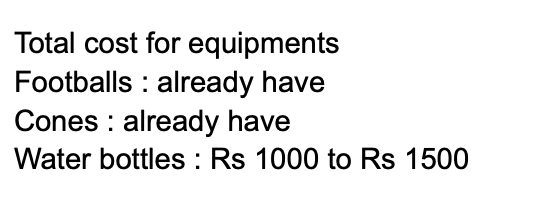
The planning and execution of “Divyang” required a structured approach. From conceptualizing the idea to executing various initiatives, I was responsible for making a whole plan of activities that will be followed since they will be different for blind students, to manage all the costs and to contact people for help, and delegating tasks among my peers. The process taught me the importance of meticulous planning and contingency strategies. Despite unforeseen obstacles, such as no response from the contacts and hardship to initiate the session, I remained flexible and found alternative solutions to ensure the success of the event.
LO4 – Show perseverance and commitment in CAS experience.
Commitment and perseverance were crucial to the accomplishment of this endeavor. The path was not without its challenges; at times, the weight of my obligations made me feel overburdened. Financial limitations and volunteer dropouts made things more difficult, but I stayed committed to the cause. I discovered that overcoming obstacles and making sure an idea becomes a reality require tenacity and fortitude.
LO5 – Demonstrate skills and benefits of working collaboratively.
The value of teamwork was among the most important lessons I took away. I’ve learned from working with donors, businesses, NGOs, and volunteers that collaboration increases effectiveness and impact. We were able to plan several successful drives by assigning tasks efficiently. This experience strengthened my conviction that effective team communication is crucial for success and that no significant change can be accomplished alone.
LO6 – Engagement with issues of global significance.
This project also deepened my engagement with issues of global significance. Since it focuses on one of the most important goals, equal education which means all the people should get equal education no matter their circumstances. This experience made me realize that even small actions can collectively contribute to larger, worldwide solutions.
LO7 – Recognise and consider the ethics of choices and actions.
Ethical considerations played a crucial role in every decision we made. From treating volunteers fairly, to teaching the kids ethically. I was conscious of making responsible choices. Handling donations ethically was particularly important, as it was essential to ensure that the funds reached the intended beneficiaries. This experience reinforced the significance of ethical leadership, where accountability and honesty are fundamental to earning trust and making a meaningful impact.


planning details and evidence