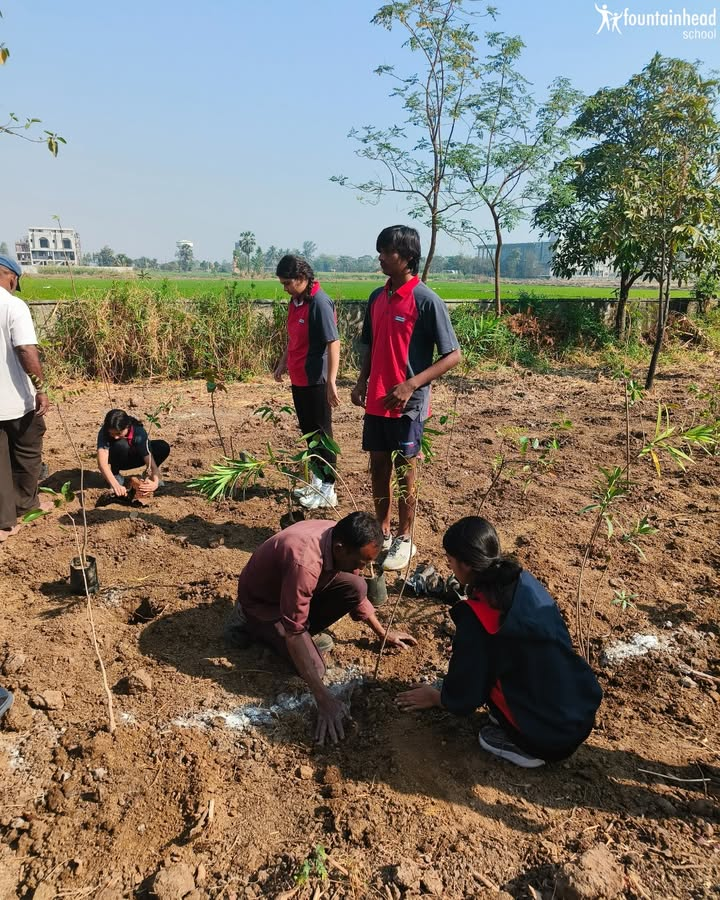
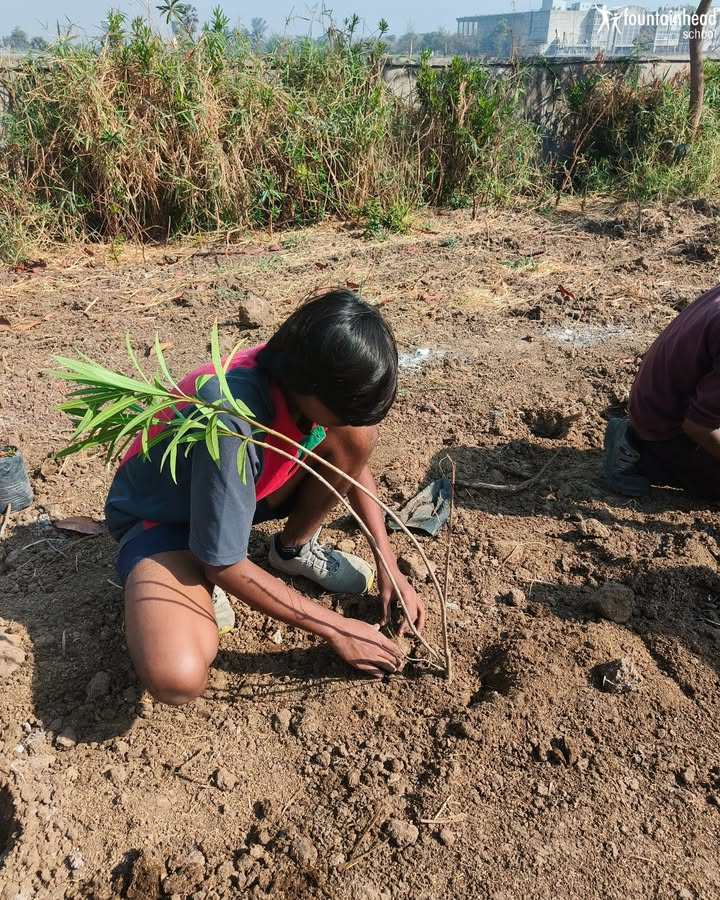
Planting nearly 100 trees with a group of 5–6 students near our school was an incredibly fulfilling experience. We followed the Miyawaki forest planting technique, which promotes fast-growing, dense forests that help restore ecosystems. Through this initiative, I not only contributed to environmental conservation but also gained a deeper appreciation for nature. Understanding the significance of afforestation and actively participating in it made me feel a sense of responsibility and gratitude toward the environment. Witnessing our collective efforts come to life was truly rewarding.
LO1: Identify own strengths and develop areas for growth
This experience helped me realize my strength in teamwork and hands-on environmental work. I was able to follow instructions effectively and contribute actively to the planting process. However, I also recognized my need to improve my endurance and patience, as planting trees manually was physically demanding.
LO5: Demonstrate skills and benefits of working collaboratively
Working in a small team, we had to divide tasks efficiently—digging, planting, watering, and ensuring the trees were placed correctly. This teamwork allowed us to complete the process smoothly and reinforced the importance of collaboration in achieving a shared environmental goal.
LO6: Engagement with issues of global significance
Deforestation and climate change are major global concerns, and by planting trees, we contributed to a small but meaningful solution. Learning about the Miyawaki technique deepened my understanding of sustainable reforestation methods and how local actions can create a lasting environmental impact.
LO7: Recognize and consider the ethics of choices and actions
This experience made me reflect on the ethical responsibility we have toward preserving nature. The act of planting trees not only benefits the environment but also future generations. It reinforced the importance of making conscious choices that promote sustainability and reduce human impact on nature.