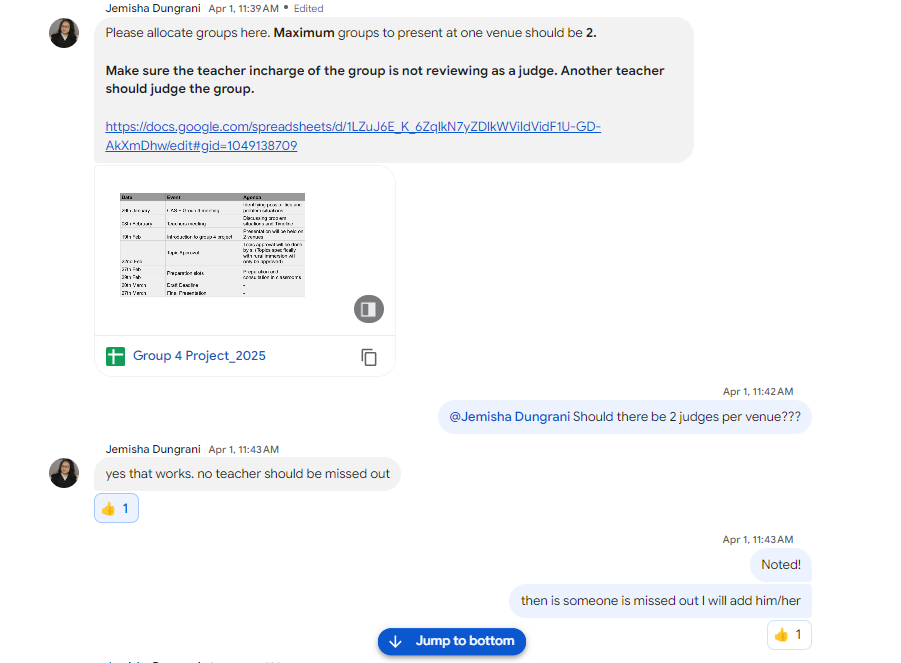
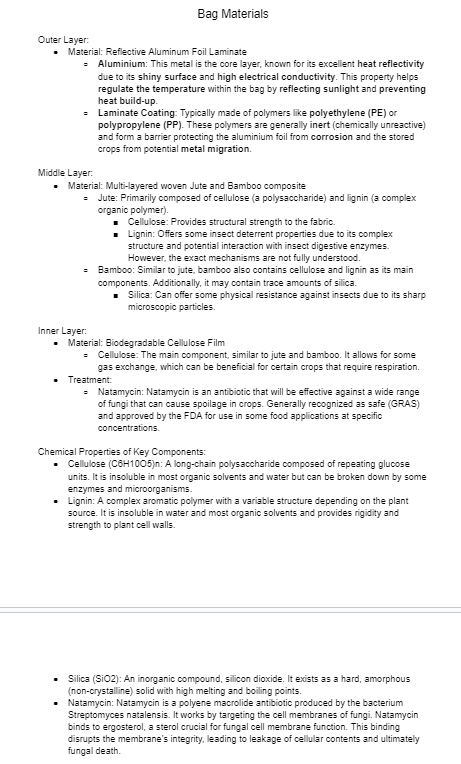
This year, we as students were given the opportunity to organize the Group 4 Project (G4P), which I took on as part of my CAS project. Naturally, being passionate about the sciences, I eagerly participated. In this role, I worked closely with a small team of students and coordinated extensively with teachers. I was tasked with organizing groups, presenting to all teams, contributing ideas, and ensuring smooth coordination with teachers. The G4P is a mandatory IB diploma requirement, bringing together all Group 4 subjects—Physics, Chemistry, Biology, Design Technology, Computer Science—into a multidisciplinary experience. Each group, composed of students from these subjects, had to develop solutions to problems they observed during their rural immersion trips. The goal was to propose holistic solutions that considered sustainability, cost, and scientific disciplines. The final task for students was to present a proposal to our teachers.
LO1 – Identifying Strengths and Areas for Growth
From the start, my interest in the sciences was a natural strength. However, coordinating with multiple people simultaneously was an area I needed to work on. As the project leader, I was confident in task division and leadership, but I realized I needed to improve my ability to follow up on tasks. Coming up with ideas for the G4P was relatively easy for me, as my background in science and engineering allowed me to quickly brainstorm multidisciplinary solutions. However, generating multiple ideas within a short timeframe posed a challenge. Ultimately, my areas for growth were team coordination and managing many interactions at once.
LO2 – Undertaking Challenges and Developing New Skills
While I was already proficient with tools like Excel and Google Sheets, this project required me to utilize these skills more fully. I had to relearn shortcuts and improve my content organization skills. Time management became another significant challenge due to the demands of the DP program, with IA submissions, SAs, and exams on the horizon. Balancing this project with my academic workload forced me to manage time effectively and ensure team tasks were progressing. I also developed new skills, such as delegating tasks based on team members’ strengths, enhancing my leadership abilities. At times, things didn’t go as planned, but these experiences taught me patience. Coordinating with other groups also required me to make the project engaging for students who might not have been as interested, which tested my planning and perseverance.
LO3 – Initiating and Planning a CAS Experience & LO4 – Showing Perseverance and Commitment
This project spanned over a month, during which I had to initiate many sessions, discussions, and meetings. I was responsible for introducing five groups to the G4P and following up with supervisors and team members. Balancing this responsibility with my academic workload was challenging but rewarding. I committed around 16-17 hours overall, including both group work and my coordination duties. Additionally, I contributed ideas to 2-3 other groups, helping them develop their project proposals. This reinforced my perseverance, as I remained dedicated to ensuring the project’s success.
LO5 – Demonstrating the Skills and Benefits of Working Collaboratively
The team collaboration, especially with teacher facilitators and fellow students, made this project a success. Division of roles allowed us to complete tasks efficiently and ensured less burden on each member. Collaborating with teacher facilitators helped me identify gaps in my planning, while teamwork improved the quality and timeliness of our outputs. Working as a group also enhanced the learning experience for all, fostering skills development in each member.
LO6 – Engagement with Global Issues
The project gave us the opportunity to engage with globally significant issues. Many groups addressed challenges observed during rural immersion trips, such as lack of electricity, sustainable farming, waste management, and affordable housing. As the project leader, I facilitated groups and heard a variety of solutions. This helped me deepen my awareness of global challenges and think critically about potential solutions. Although I did not directly contribute to the implementation of these solutions, the project encouraged me to reflect on these issues and consider how I might apply similar problem-solving approaches in the future.
In conclusion, this project allowed me to develop leadership, coordination, and problem-solving skills while engaging with globally significant issues. It was a valuable learning experience that will shape my approach to future challenges.