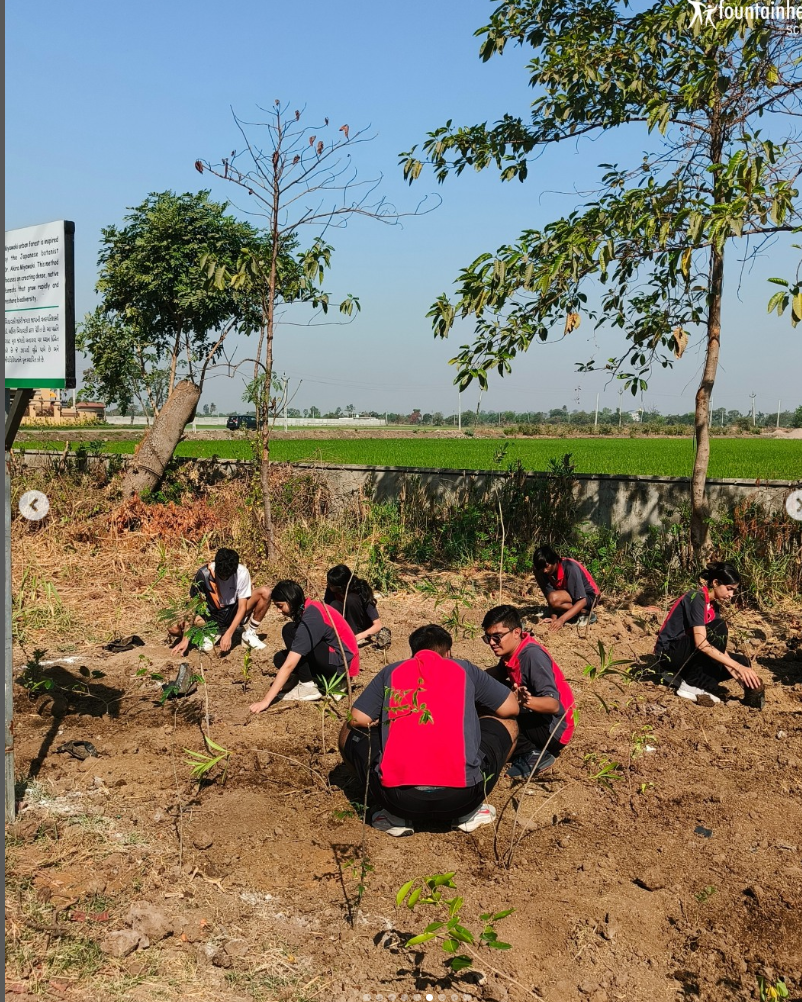
Environmental conservation has always been an important matter; living through that experience in the Miyawaki Plantation method truly broadened my understanding of sustainability and added to my knowledge on the best methods of afforestation. As part of my service experience, I participated in a Miyawaki plantation drive. I learned about this unique Japanese reforestation technique that allows faster and denser forest growth. It not only benefited my participation in safeguarding the environment but also transformed my views regarding environmental responsibility.
One of the critical takeaways from this experience is realizing the issues of deforestation, climate change, and biodiversity loss (LOI 6). Trees grow at least ten times faster through the Miyawaki method than through conventional plantations, making it a viable strategy to tackle deforestation. Realizing how such small-scale initiatives combined together could restore green cover and the urgency of doing something about the environment provided more sustenance.
This experience also allowed me to reflect on my strengths and areas for growth (LOI 1). I discovered that I am adaptable and can quickly learn new techniques when given the right guidance. However, I also realized that I need to improve my patience, as I initially found it difficult to remain engaged in the physically demanding process. Recognizing this helped me develop a more determined and disciplined mindset throughout the plantation drive.
It also cemented in me a fervor for resilience and commitment through service-hearted pursuits (LOI 8). The planting task was arduous and intoxicated by deliberate digging, planting, and watering. The weather was harrowing and, at times, the labor felt draining, but that made me appreciate the need for persistence in achieving long-lasting environmental outcomes. Seeing the end result: a decent, well-planted green patch-reinforced my belief that change can surely be made by patience combined with hard work.Furthermore, this experience strengthened my ethical values and environmental responsibility (LOI 7). The Miyawaki plantation emphasized the idea that our actions directly impact the planet and future generations. It made me reflect on how urbanization and human activities often disrupt ecosystems and how small initiatives like this can contribute to restoring balance. However, I left with renewed responsibility-not just to participate in such activities, but to advocate for and implement sustainable practices in my daily life.
To sum it up, the Miyawaki plantation drive opened up a whole experience that went hand in hand with learning, physical effort, and ethical reflection of self. I came to understand that conservation is not just about large-scale projects; rather, it is those small individual efforts that go into accumulating meaningful contributions over time. This experience has inspired me to explore more ways in which I can contribute to environmental sustainability and make a difference within my immediate community.