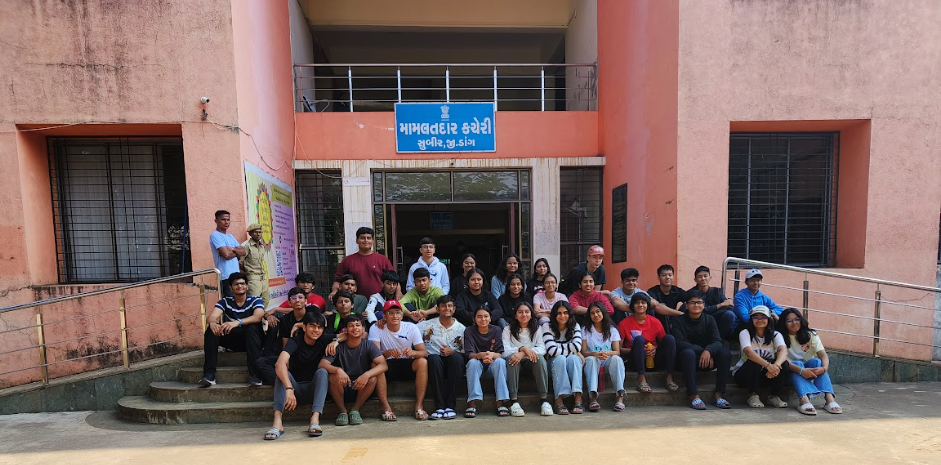
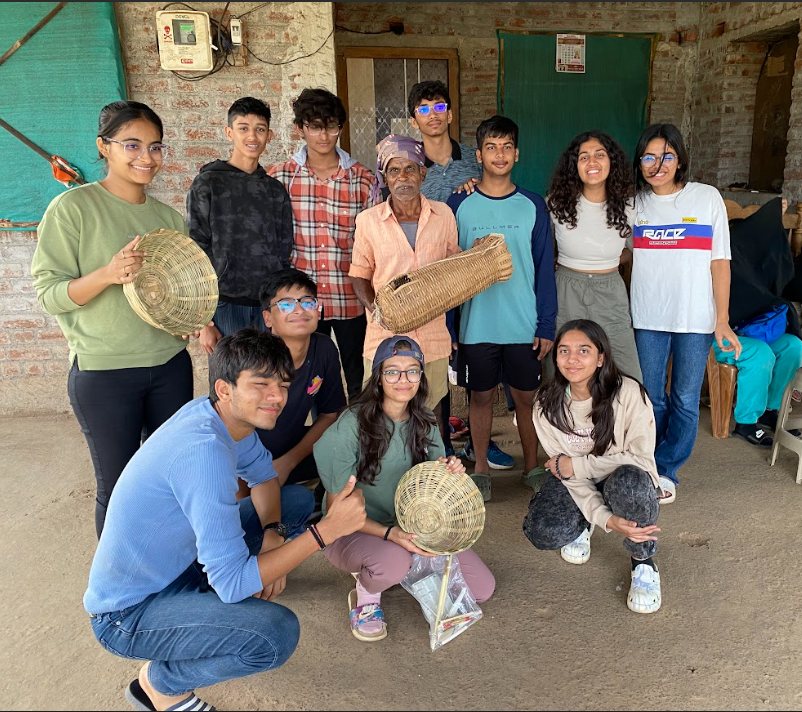
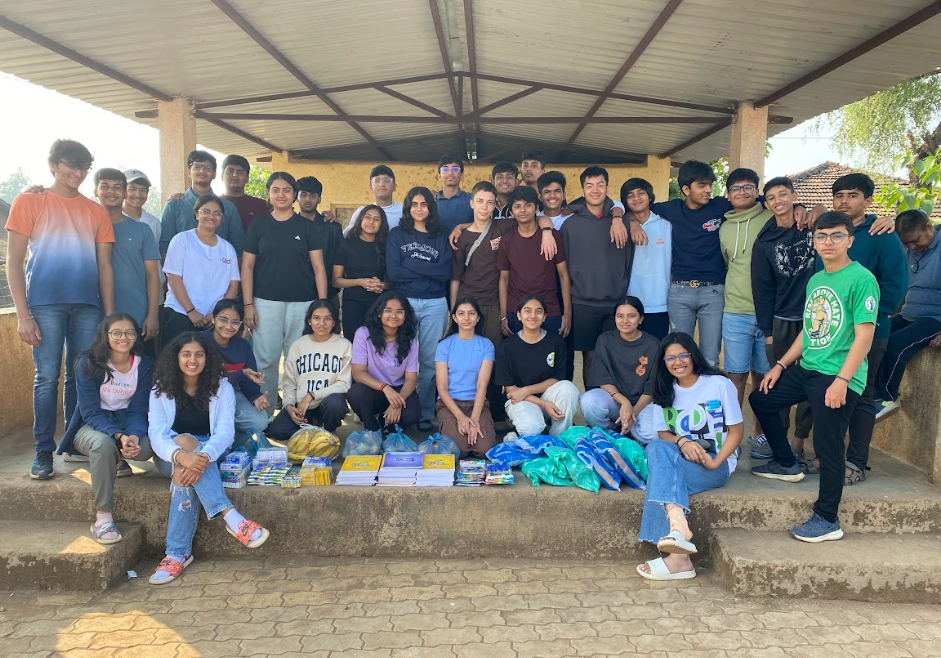
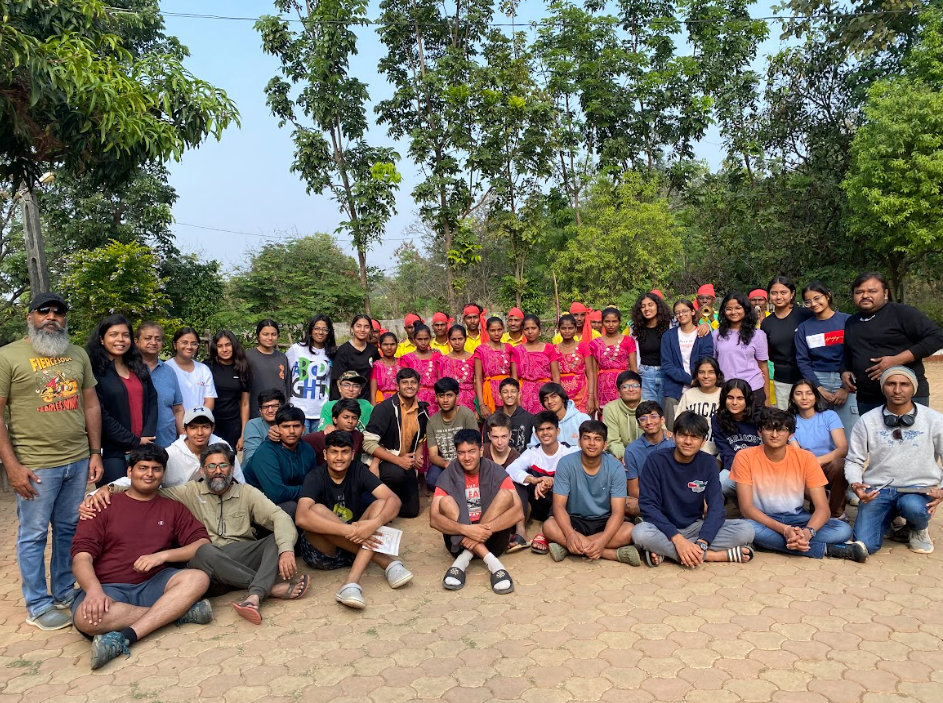
For the Rural immersion 2023 me and my batch went to Mokhamal Dang. There we had activities all 6 days and were divided into visiting the local school, interacting with tribes, basket weaving, wall painting etc which catered to all aspects of CAS (creativity, activity and service). Other than these activities I got to interact and socialize with my classmates and mentors too, where we got to know about a few life lessons, and talked about each other’s future aspirations as well. According to me, this immersion’s agenda was to understand how people live in different parts of the world and how minimalism plays a role in their lives.
After each day, we all sat together in groups and reflected on what activities were done. Moreover, we were provided with a booklet that had a few questions, phrases, quotes etc which directed on the activities done on the following days. For instance, for day 1 we were provided with five quotes from which we had to pick one which we thought best suited the day. According to me, the quote that was applicable for day 1 was, “My grandfather used to say that once in your life you need a doctor, a lawyer, a policeman, and a preacher. But every day, three times a day you need a farmer.†Now why was this quote the best suitable one, was because in the first half of the day we interacted with the hardworking tribes and how they manage their hay in order to prepare their food and for their families too. Not only prepare but the initial process of planting, watering, plucking, till the end product (rice) is fully made. Then we’d visited a house of a local who was made up of clay, cow dunk, and bamboo sticks. They also welcomed us inside their home in order to make us understand the working of handmade machines and grains.

LO2 – Demonstrate that challenges have been undertaken, developing new skills
Day 2 was all about visiting the local school and interacting with the children, making them play games such as football, frisbee, dodgeball, etc. Also preparing midday meals for them and painting sceneries, Warli art etc. Visiting the local school and being involved in their culture was a whole different experience, furthermore getting to know how they manage their education system. That day I felt so overwhelmed and empathetic towards the children because they were so happy with the little things they had and were grateful for whatever came their way, whether it was the food we prepared or the activities that we were making them do. The act of minimalism and gratefulness was clearly evident and as they say that ‘actions speak louder than words.’ Even though there was a language barrier and a communication gap, they were still able to express themselves as they were so joyful and excited to see us and spend time with us. The day really helped me develop social skills and how to be grateful about the things I already have rather than wanting for more.
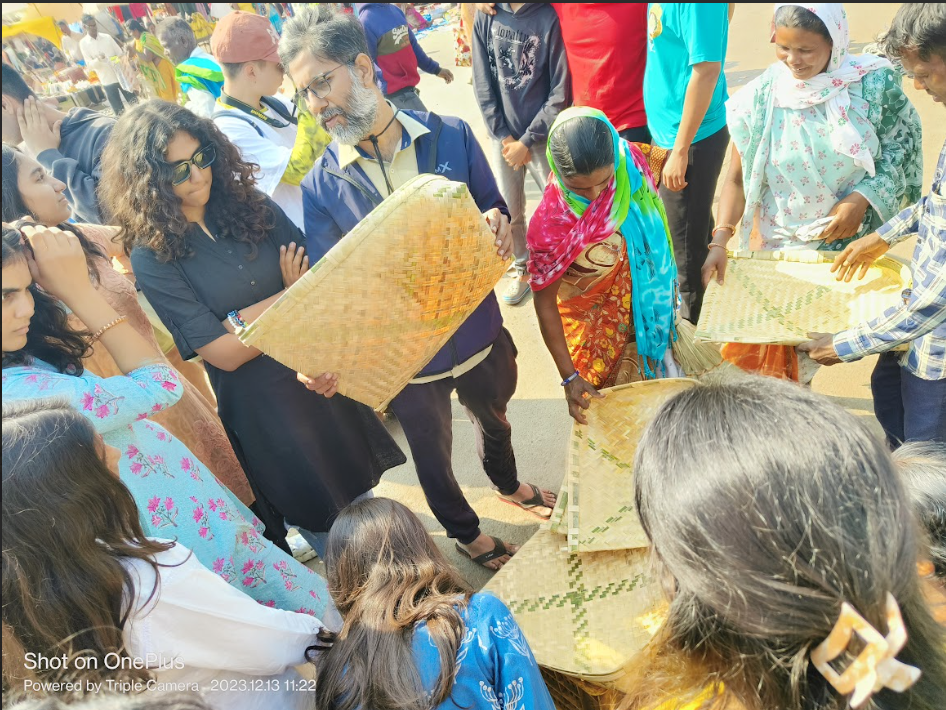
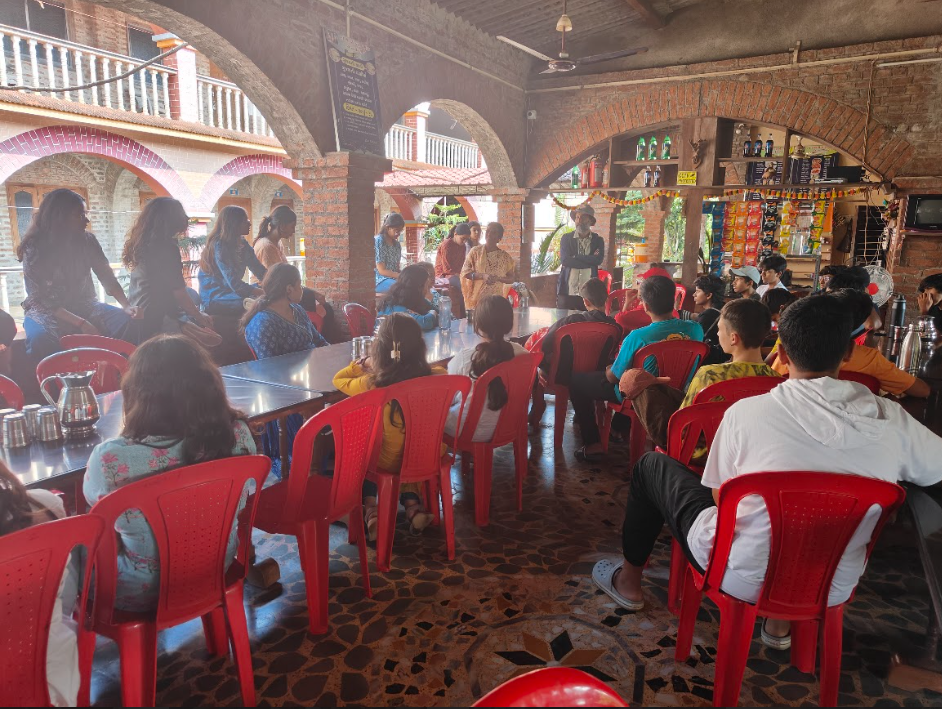
Day 3 was where we visited the local market (Haat) and it personally raised many thoughts and mixed feelings as there were different vendors who had their own unique marketing strategies in order to sell their product quickly and attract people to buy it. For instance, to sell watches the vendor kept them in a small tube which was filled with water in order to prove that the watches are waterproof. There we also got to know how their economy operates and how a market is actually managed such as import, exports, transportation etc. On the same day, we had an enlightening discussion with a social worker (ASHA) of Dang. She demonstrated an act of kindness and courage towards her community. She shared information about her lifestyle, income, experiences and her daily work as well. It was so amusing and inspiring listening to her because she was already giving so much to the community like providing basic education to children under 18, making sure that each and every one is getting affordable and available hospitality and much more.
LO6 – Engagement with issues of global significance
Today, day 4 we visited the Taluka Panchayat, milk cooling factory, malnutrition center and market to buy stationary, warm clothes and food items for children. In Taluka Panchayat we were told about how a local courtroom works and how important decisions are made in order to bring change. Moreover, in the malnutrition center they talked about how underweight children are fed with two different powders in order for the baby to get back to a normal weight. And in case of critical conditions the mothers have to stay in the center for a week or so for further treatment. Furthermore, while we visited the government hospital where each and every facility was free of cost, hygiene was very properly taken care of and there were specific sectors for each facility too. Even though it was a government hospital, it still had all the facilities like a private hospital. Here, discovering these sectors we understood that compared to other rural areas, Mokhamal was quite equipped with healthcare facilities because of varied technological advancements.
LO7 – Recongnize and consider the ethics of actions and choices
Participating in a rural immersion and village visit provides a unique opportunity to reflect on the ethical implications of one’s actions and choices. This experience fosters a deeper understanding of the disparities between urban and rural communities, compelling individuals to critically examine their privileges, assumptions, and responsibilities. During the visit, interacting with villagers and observing their lifestyle raises questions about fairness and equality. For instance, recognizing the limited access rural communities have to basic needs like education, healthcare, and clean water might prompt an ethical inquiry into societal structures and resource distribution. This awareness encourages us to evaluate how our decisions such as consumption patterns or advocacy for policy change can contribute to reducing inequalities.
To conclude, throughout this trip there were many social issues that were discovered and following that, the sustainable development goals such as no poverty, clean water and sanitation, decent work and economic growth, responsible consumption and production and others were identified. The rural immersion has been an amusing experience for me and the reasons are countless as I came across many surprising facts and information about the place and its people. Getting to know about their economy, standard of living, culture, healthcare system, education etc enlightened me to a very great extent. Moreover, my gratitude towards them increased drastically because living in a city where all the facilities are easily accessible to us there are people on the other side who have to work their way out. After this trip one thing was very clear to me and that is, grass is not always greener on the other side, it is greener where you water it.