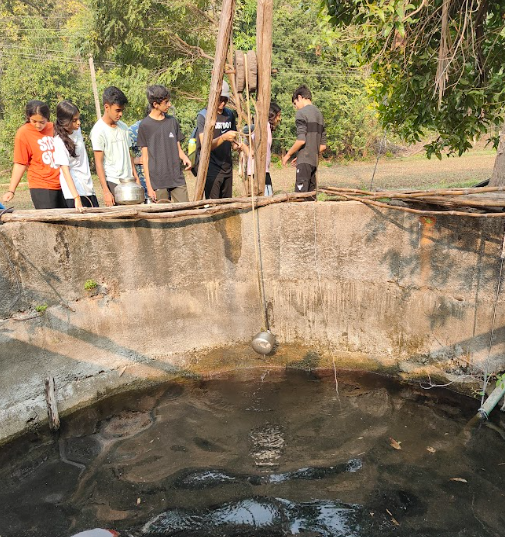
The rural immersion experience took us on an insightful journey to Kada Dam, near a village surrounded by rich wildlife. This trip gave me a meaningful opportunity to explore the lives of rural communities by fully engaging with the villages around our campsite. Through various activities such as visiting the villages, conversing with the locals, and observing their daily routines, I gained a deeper appreciation for rural life. Additionally, our visit to a local school allowed us to bond with the children through play and meaningful discussions. Experiencing activities like cow milking and learning traditional crafts such as bamboo basket weaving further enriched my understanding of their culture. Beyond these experiences, participating in thrilling activities like zip lining and river crossing infused the trip with excitement.
Throughout this journey, I embodied several attributes of the learner profile. By absorbing new knowledge, I expanded my understanding of rural lifestyles and wildlife conservation. Keeping an open mind, I embraced different perspectives and ways of life. My curiosity led me to ask questions about how the villagers coexist with wildlife and adapt to their environment.
LO1 – Identifying Strengths and Areas for Growth
Reflecting on the Learning Outcomes, this experience enabled me to recognize and develop my strengths while also identifying areas for improvement. For example, through cooking activities, I enhanced my culinary skills and built confidence in preparing dishes independently. Similarly, while weaving bamboo baskets, I discovered my ability to quickly adapt and learn new skills, showcasing my flexibility and eagerness to acquire knowledge.
LO2 – Taking on Challenges and Developing Skills
Stepping out of my comfort zone, I tackled challenges such as overcoming my fear of heights during zip lining and river crossing, demonstrating my commitment to personal growth. As an introvert, initiating conversations with students at the village school was initially daunting, but with encouragement from my peers, I gradually became more comfortable and actively participated in the interactions.
LO3 – Initiating and Planning a CAS Experience
Taking initiative and planning activities during the rural immersion experience highlighted my ability to organize and execute collaborative efforts. From arranging games and cultural exchanges with the village children to fostering teamwork, I contributed to meaningful interactions that helped bridge cultural differences.
LO4 – Demonstrating Perseverance and Commitment
Adapting to the unfamiliar environment for seven days required resilience and dedication. Despite being away from the comforts of home, I gradually embraced the campsite lifestyle, fully immersing myself in the experience. Working closely with my group reinforced the value of teamwork, allowing us to complete tasks efficiently and support one another’s strengths and weaknesses.
LO5 – Working Collaboratively and Recognizing its Benefits
Throughout the journey, we were grouped into teams of ten, undertaking all activities together. During our visit to the village, we engaged in conversations with the locals in Gujarati, discussing their daily struggles. During the basket weaving sessions, my peers provided guidance whenever I needed help, which helped me refine my technique. Additionally, we collaborated in meal preparation, with my group assigned to make sheera (a traditional Indian dessert). By sharing responsibilities, we successfully created a delicious dish that our peers greatly appreciated. This teamwork emphasized the effectiveness of collaboration, enabling us to leverage each other’s strengths and support one another.
LO6 – Engaging with Issues of Global Significance
Engaging with global issues such as access to quality education, economic development, and environmental sustainability helped me understand the broader impact of our actions. By actively participating in initiatives that promoted education and economic empowerment in the village, we contributed to the Sustainable Development Goals (SDGs) and fostered meaningful change.
LO7 – Recognizing and Reflecting on Ethical Considerations
This experience also prompted me to reflect on ethical considerations, particularly in appreciating the resilience and positivity of the villagers despite their hardships. Their unwavering optimism was a powerful reminder of the importance of gratitude and perseverance in facing life’s challenges.
Overall, the rural immersion experience was a transformative journey that provided me with valuable insights, encouraged personal growth, and deepened my appreciation for the interconnectedness of global communities. As I continue reflecting on these lessons, I aim to carry forward the values of empathy, resilience, and collaboration in my future endeavours.