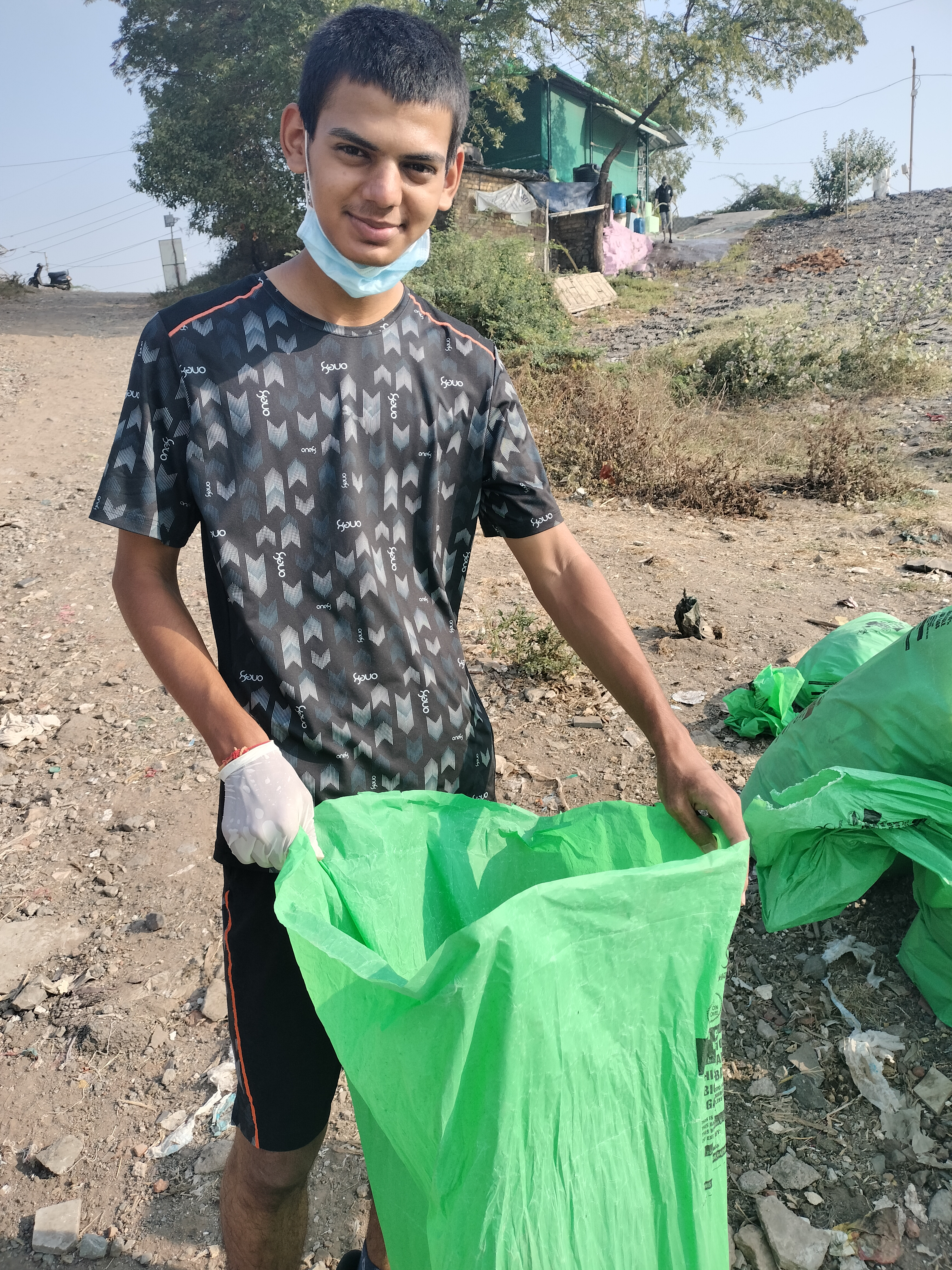
The Community Clean Up Drive program is an initiative launched by our school to clean up and maintain the surroundings in order to prevent illness, make the area safe for animals, and keep the environment clean. The entire CAS experience was divided into four sessions, the first two in an adjacent pond and the last two at Tapi Riverside Clean up. These seminars taught everyone new things, since during the pond cleaning, we learnt how to manage the oxygen under the water for the birds who drink it, which is essential for keeping it clean. These lectures taught us that we should all put garbage in trash cans and protect the environment.
L4. Show perseverance and commitment in CAS experience
The two locations where we visited for cleaning over the course of four sessions were pretty huge, with a lot of garbage all over the place.To cover the whole place, we separated into small groups and each took over a small area to clean, allowing us to easily clean all of it.This CAS experience requires a great deal of focus and effort.The cleaning process was proving to be challenging since it required a significant amount of effort, such as collecting waste, placing it in bags, and then delivering the bags to Eco Vision groups for disposal. This event offered us the opportunity to cherish and reflect on our contribution to the city.
L5. Demonstrate skills and benefits of working collaboratively
Coordination is essential for completing this CAS experience as we were given a large area of land to gather garbage from, which needed coordination and a lot of effort. To clean the large area, we separated into small groups and began gathering rubbish from all around the space available. This not only helped us clean up the area, but it also taught us how to work together in a small group. Furthermore, working together allowed us to easily attain our aim. Collaborating allows us to gather more rubbish and inspires us to continue doing so for the sake of environmental sustainability.
L6. Engagement with issues of global significance
The problem we were addressing was waste in our city, which is currently more widespread than it was a few years ago and has an impact on the environment, society, and health.We addressed numerous sustainable development goals during the clean-up sessions, such as Goals 3, 6, 11, 12, 13, 14, and 15. Among the main concerns being addressed in the clean-up initiatives are land pollution and climate change. These elements have the potential to negatively impact both the aquatic world, which is home to a diverse range of marine species, and the delicate coastal ecology. Beaches with rubbish all over them may have negative effects, therefore we should make the region our home and learn how to enjoy it without damaging it.
L7. Recognize and consider the ethics of choices and actions
Engaging in this CAS event provided us with a wealth of knowledge.First, we took the initiative to keep our surroundings clean, which benefits the environment and animals as well. We collected rubbish from all over the designated zone and gave it to the Eco Vision organisation for disposal.We visited the Tapi River Font on our third and fourth drives in order to clean up the area and look nice. Perhaps this would inspire the locals to maintain environmental cleanliness. Because this experience improved the environment and the community, I felt it was morally correct.The SDGs 3, 6, 11, 12, 13, 14, and 15 are addressed in this CAS experience.
