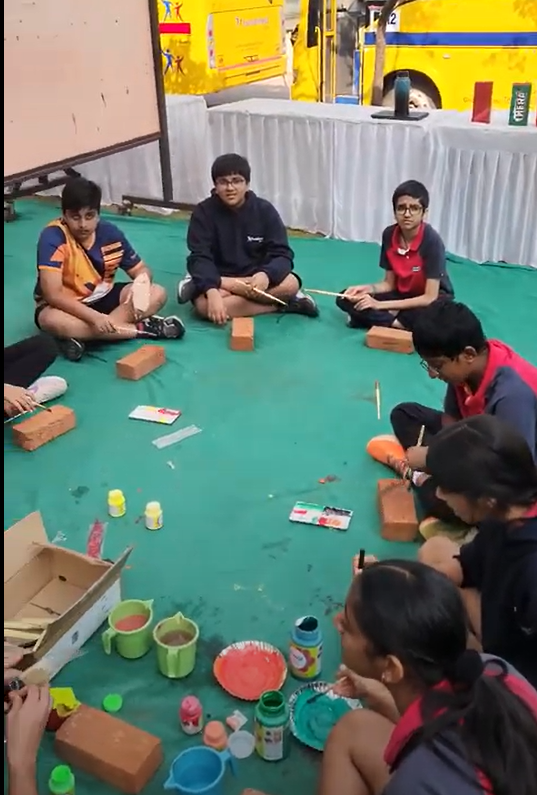
As a volunteer at the Creative Mela, I was responsible for managing a brick painting stall where students had the opportunity to express their creativity through painting on bricks. To ensure the activity ran smoothly, I prepared two days in advance by creating exemplary designs, which served as templates or sources of inspiration for the students. This was the first time I explored brick painting myself, and it presented a set of challenges. The rough texture of the bricks made it difficult to achieve smooth designs, requiring extra effort to ensure the colors and patterns looked good. Additionally, the bricks were fragile and could easily break if handled roughly or placed carelessly on the ground. Despite these challenges, it was a rewarding experience, as I was able to guide students through a new artistic medium, while enhancing my own organizational and problem-solving skills.
LO1 – Identify Own Strengths and Develop Areas for Growth
Managing the brick painting stall allowed me to recognize my strengths and areas where I can grow. One of the strengths I identified was my creativity. Designing exemplar artwork for the students not only helped inspire their creativity but also gave them a clear idea of what they could achieve. It was fulfilling to see my designs spark their unique artistic expressions. I also realized that I am good at problem-solving. The rough texture and fragility of the bricks made painting tricky, but I quickly found solutions, such as selecting more appropriate paints and advising the students on how to handle the bricks with care. Additionally, I demonstrated strong organizational skills by preparing all the materials and designs ahead of time, ensuring that everything was ready for the students to start painting without delays or confusion.
However, this experience also revealed areas for growth. One of the key areas I need to work on is patience. Some students found it challenging to work with the rough brick surface, and I could have been more patient, providing step-by-step guidance to help them feel more confident in their work. I also recognized that my technical skills in working with rough and delicate materials can be improved. Although I adapted well to the situation, there is room for growth in refining my technique when working with challenging textures. These realizations have motivated me to focus on developing more patience and enhancing my technical skills to handle similar tasks more effectively in the future.
LO2 – Demonstrate That Challenges Have Been Undertaken, Developing New Skills
The Creative Mela presented several challenges that pushed me to develop new skills and explore new artistic techniques. One of the main challenges was working with a completely new medium—painting on bricks. The rough, uneven surface of the bricks required me to adjust my painting style, and I had to experiment with different types of paint and brushes to get the designs just right. This hands-on experience developed my adaptability, as I quickly learned how to adjust my techniques based on the unique demands of the material.
Another challenge was managing the fragility of the bricks. They could easily crack or break if handled roughly or placed on the ground without care. This required me to be extra cautious while working and to guide the students on how to handle the bricks carefully. I also had to ensure that we had enough materials ready to replace any broken bricks so that the students could continue painting. This situation improved my organizational skills and taught me how to manage resources effectively.
Through these challenges, I developed a stronger sense of problem-solving, adaptability, and resource management. This experience reinforced the importance of being prepared for unexpected difficulties and learning how to adjust my approach when working with new materials.
LO5 – Demonstrate Skills and Benefits of Working Collaboratively
Collaboration was a key element in the success of the brick painting stall. I not only managed the stall but also worked closely with the students, guiding them through the painting process. The collaborative dynamic between myself and the students allowed us to work together to overcome the challenges posed by the rough texture of the bricks. I had to listen to their ideas and offer suggestions while ensuring that they had enough creative freedom to express themselves. This process allowed us to create a shared atmosphere of creativity, where both the students and I contributed to the artistic outcomes.
Additionally, I worked alongside other volunteers who helped manage the stall and handle the materials. Effective communication and teamwork were essential, especially when we faced issues like broken bricks or running low on supplies. We had to be flexible and adapt quickly to keep the activity running smoothly and ensure that the students’ experience was not affected. By collaborating with the other volunteers, we were able to solve problems efficiently, pool our resources, and support each other when needed.
Overall, this experience demonstrated the value of teamwork. Working together with the students and volunteers made the event more enjoyable and productive, as we were able to share responsibilities and ensure the activity ran smoothly. The experience reinforced the idea that collaboration not only makes tasks more manageable but also enhances the quality of the outcomes by drawing on the strengths of everyone involved.