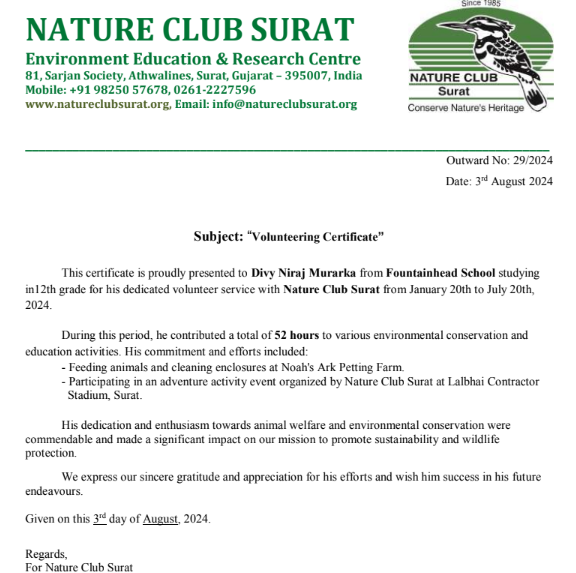
When we got to the Nature Club, a nearby animal sanctuary, a required CAS experience became an exciting expedition . the possibility of helping to care for a wide variety of rescued animals, including emus, dogs, cats, parrots, pigeons, guinea pigs and cleaning the cages. The whole event looked to be exciting and fulfilling, even though a hint of anxiety may have overwhelmed the initial delight . But we all knew how much work needed to guarantee a good outcome for the animals and ourselves .
LO2 – The challenges have been undertaken is that while giving food or cleaning the cages was a difficult job because cleaning the cages was for the first time but giving to food to other animals it was not that difficult but cleaning the cages was difficult because the brother was helping me he was putting water in pressure to clean the wastage of recused dogs and cats and I have to wipe the water which was left in the cage that water I have to remove from the wiper and check that there is no small amount of water left .
LO 5 – I was not the only one working at Animal shelter but there many others there too. There I learned the benefits of working together and how does it make it every task very easy to perform as over there few people were assigned to clean the cages, few very told to chop the food, few were told to feed the animals and more. This made the task very efficient as each step was having few people working on it making the work easy and time effective.
In conclusion, the initiative to feed stray dogs and care for domestic animals in animal shelters exemplifies the transformative power of service learning within the CAS framework.working collaboratively to support vulnerable creatures, and taking proactive steps to initiate and plan a meaningful CAS experience, students not only demonstrate their compassion and empathy but also contribute to a more compassionate and interconnected world.