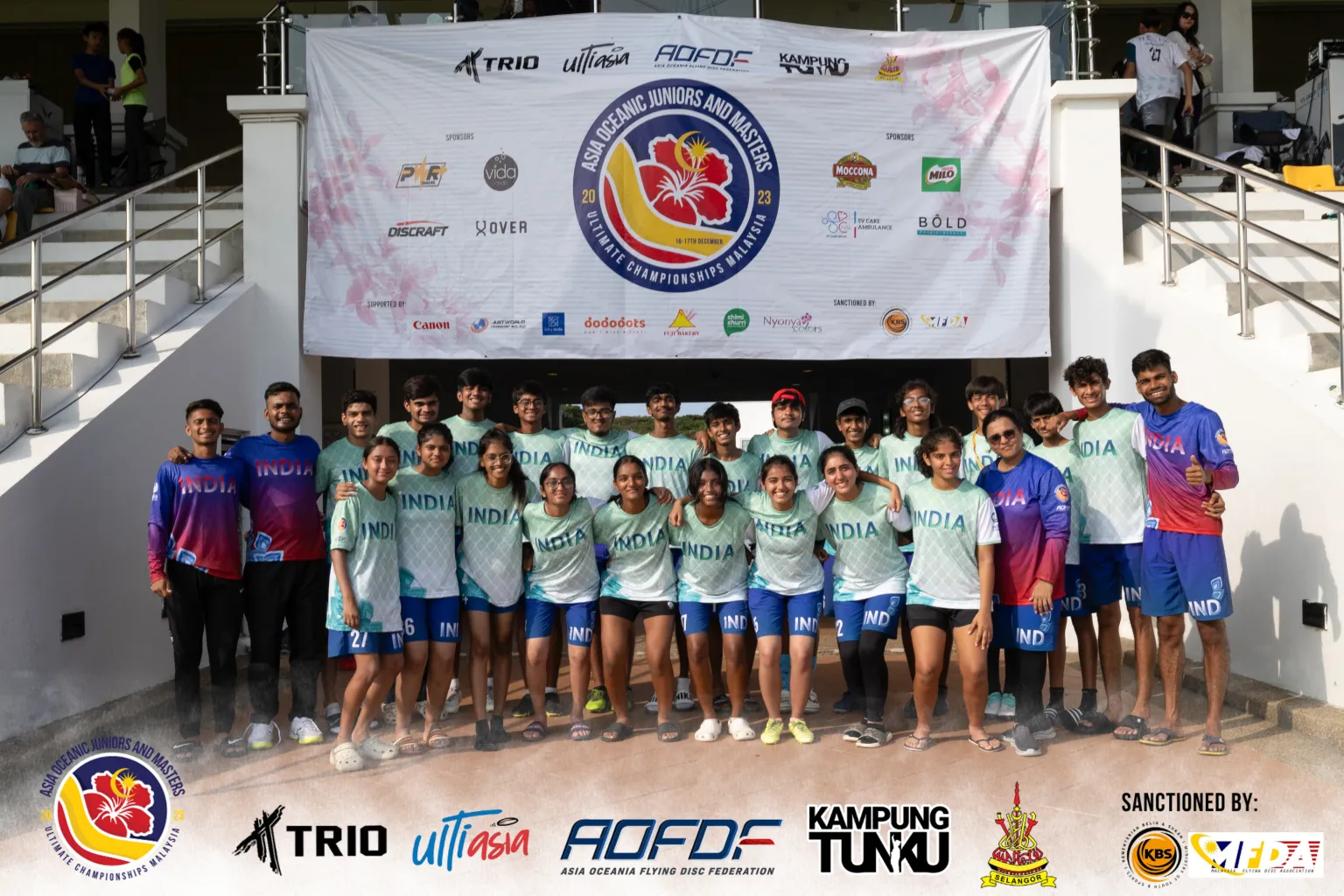
In January, we were introduced to the Asia-Oceanic Juniors-Masters Ultimate Championship, set to take place in Malaysia at the end of the year. Our school team was selected to participate, giving me an incredible opportunity to showcase my passion, skills, and talent on an international stage. By August, our visas and participation were confirmed. With just four months left until the tournament, my team and I dedicated ourselves wholeheartedly to training. We engaged in daily practice sessions, four-hour weekend camps, and additional individual workouts.
Finally, December arrived, and I reached Malaysia, ready to compete against teams from the Philippines, Singapore, China, and other countries. At first, I felt overwhelmed, but with the support of my team, I overcame my nerves and pushed forward. We played fiercely, challenging our opponents, and ultimately secured 6th place out of 10-15 teams. The tournament was an eye-opening experience, offering me valuable lessons and new perspectives. I formed friendships, competed against diverse teams, and gained new skills throughout the event. It reinforced the importance of resilience and humility, showing me that no matter how much we train, we can never be fully prepared for new challenges.
LO1
During training, I critically assessed my strengths and weaknesses to enhance my performance. I identified handling and jumping as my weaker areas, so with my coach’s guidance, I focused intensely on improving my handling skills during practice matches. At the same time, I worked on refining my strengths, particularly cutting. My routine over the four months included daily practice, early morning runs, gym workouts after school, and intensive weekend camps. Through dedication and plyometric training, I improved my handling abilities and increased my vertical jump, boosting my confidence on the field.
LO2
Given the international level of the tournament, giving our best in training was essential. However, balancing intense practice sessions with upcoming term exams was a major challenge. Managing studies, training, and personal time required careful time management, but over time, I learned to prioritize effectively. When exams approached, I focused entirely on academics, and once they ended, I redirected my full attention to training. This experience taught me how to balance schoolwork, personal life, and sports efficiently.
Midway through training, I experienced severe pain in my right tricep. Initially, I ignored it, but as it worsened, I consulted a doctor and was diagnosed with a tricep spasm just a month before the tournament. This setback was frustrating, forcing me to choose between resting for recovery or pushing through the pain. I opted for a balanced approach—light training with an emphasis on lower-body strength while minimizing strain on my triceps. Regular physiotherapy helped me manage the injury throughout the tournament.
Additionally, upon arrival at the tournament, we were initially overwhelmed by the exceptional skill levels of the other teams. Our first few matches were challenging, but we quickly realized that teamwork and trust were the keys to success. Once we embraced this mindset, we started winning games and gained confidence in our abilities.
LO4
Over the four months of preparation, our team dedicated itself to mastering new plays, skills, and building trust. There were times when exhaustion from training and managing other responsibilities made things difficult, but I remained determined. I understood the importance of discipline and perseverance. In total, I dedicated 221 hours to practice, gym sessions, and training, averaging about 2.5 hours daily.
LO5
Beyond the tournament, we also had the exciting opportunity to design our Team India jerseys. A few teammates and I took on this project, brainstorming ideas and working collaboratively to create unique designs. We spent our free time discussing and refining the concepts, incorporating diverse perspectives from our team. In the end, we designed 3-4 jerseys that our teammates loved.
As the team’s spirit captain, I also played a crucial role in ensuring that my teammates understood the game’s rules. I spent hours reviewing them, guiding my team through the accreditation process, and helping them familiarize themselves with key regulations.
Learner Profiles demonstrated
- Balanced: This experience taught me how to effectively manage my time between studies, family, personal commitments, and training. By setting clear priorities and avoiding distractions, I successfully maintained a balance between all aspects of my life.
- Reflective: Throughout my training and the tournament, I made several mistakes, but each one became a learning opportunity. I took feedback from my coaches and teammates seriously, continuously reflecting on my performance and working to improve my weaknesses. My growth was a direct result of my willingness to analyze my gameplay and make necessary adjustments.