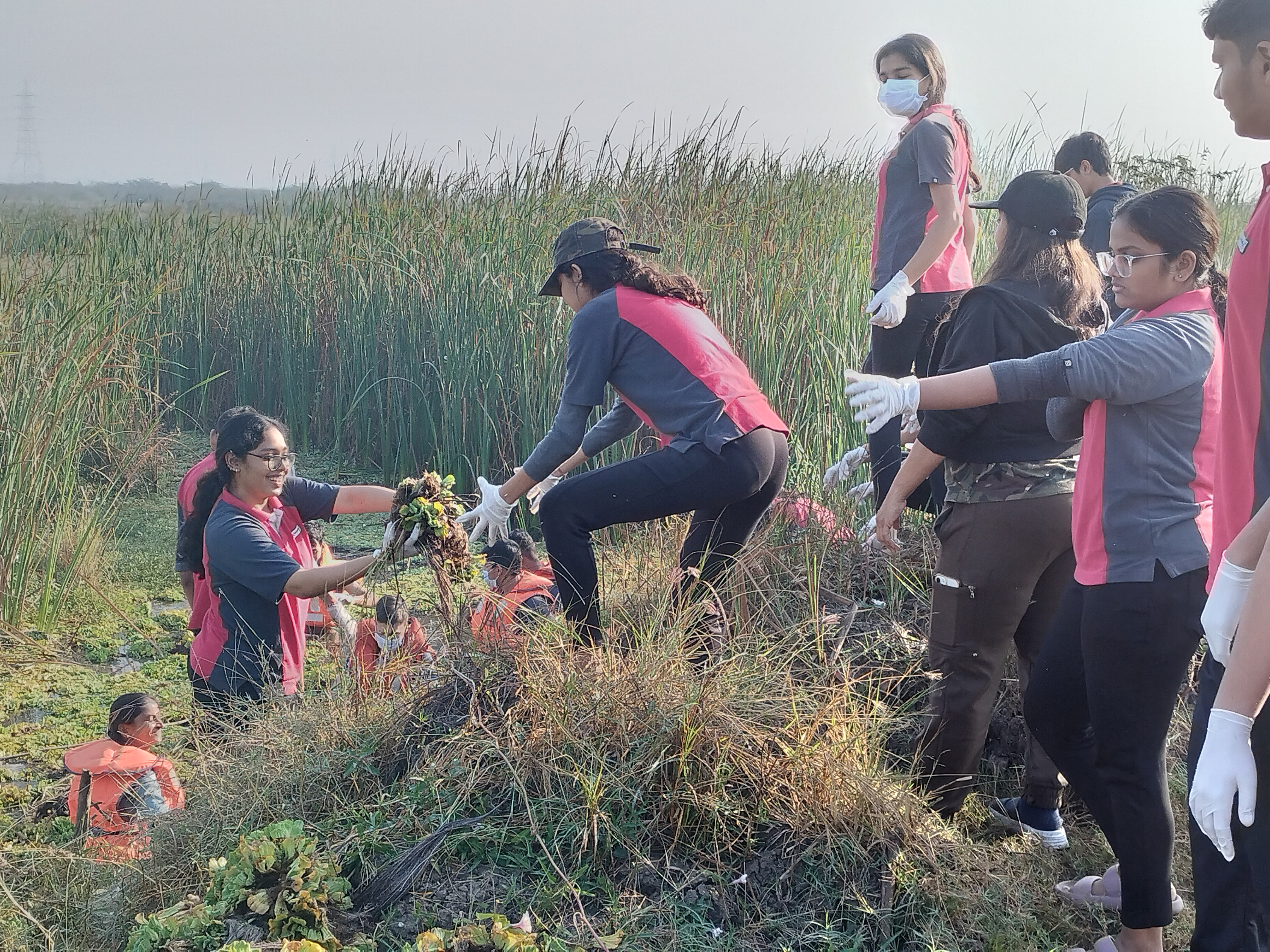
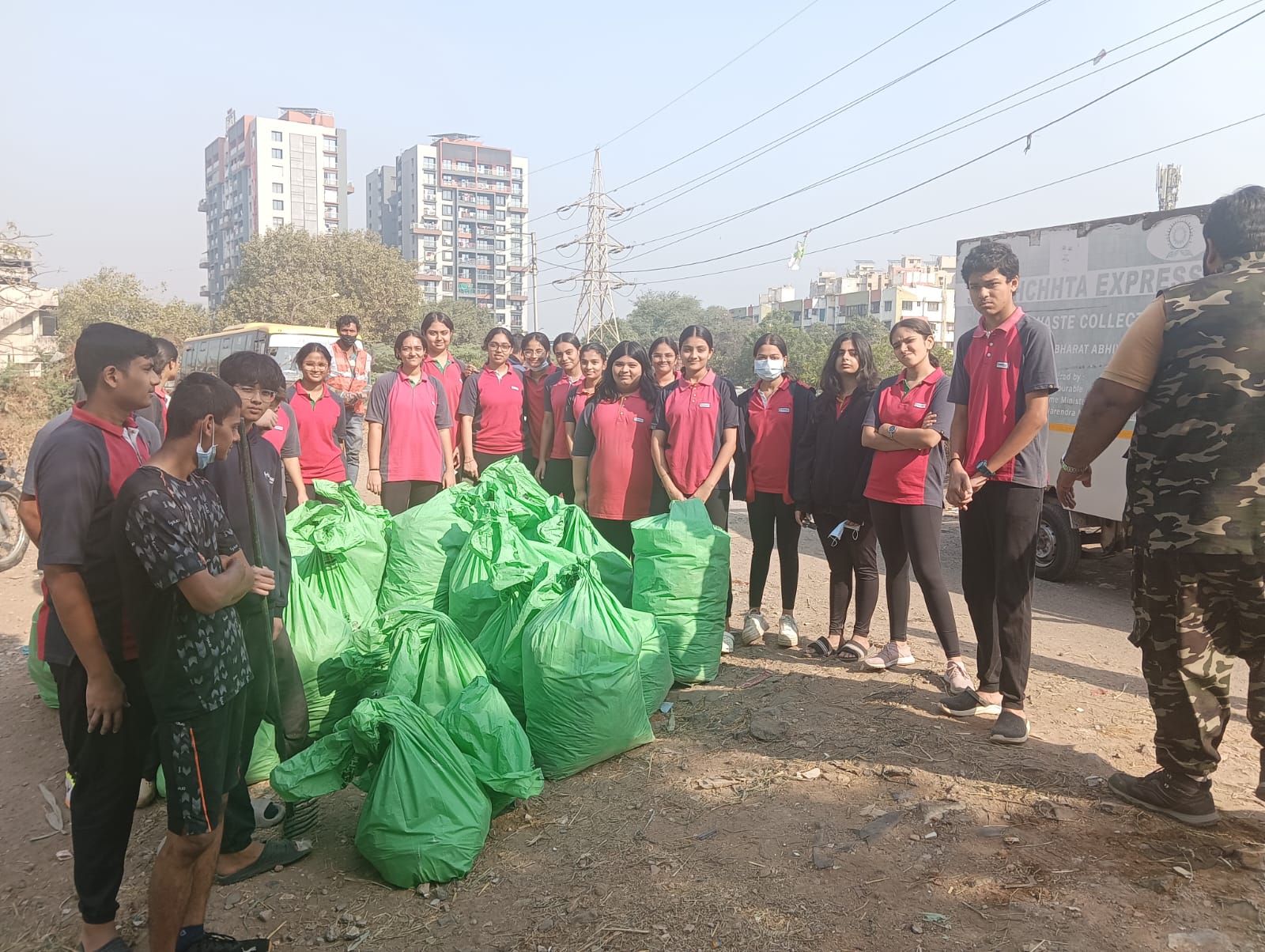
Community Clean-up was a service programme organised by our school. We planned to clean and remove waste from ponds and riverfronts. This experience was divided into 4 sessions. The main aim was to clean up and remove waste from public places, to avoid diseases, to make it a safe environment for animals as well as the general public. When we cleaned the pond of the weeds overgrown on the surface, we understood we did this to let oxygen in for the marine animals and for birds to feed from the pond. On the riverfront, we picked up all the plastic waste and other types in huge biodegradable bags.
L4. Show perseverance and commitment in CAS experience
During these 4 sessions, we would be picking garbage for what felt like many hours but would actually be only about 2 hours. Under the direct heat of the sun, we would pick up garbage. In murky waters, all weeds and overgrown plants would be removed using all our strength. We would divide ourselves into pairs or groups to make tasks easier but even then, we had to put our everything. Many times, i felt that i should drop this experience, but the feeling of pride and achievement after seeing all the waste we collected made it worth it to persevere for all the sessions.
L6. Engagement with issues of global significance
Life Below Water, SDG number 14, talks about how marine life below water is in danger in different ways because of human actions. Before we cleaned the pond in our first 2 sessions we learned that this year the count of marine life in the ponds was the least recorded. This was because the plants and algae grown on the surface blocking the sunlight and oxygen. Even the bird count had decreased because the plants wouldn’t let them dive for fish. As a service to marine life, we cleared the pond surfaces. Even if our removal was negligible in comparison, it still felt like a huge achievement to be able to serve those helpless creatures.
L7. Recognize and consider the ethics of choices and actions
After we would collect heaps and bags of trash from the riverfront, an NGO organisation would come to pick them up for reuse or proper dispersal. The labour of picking trash made me understand how easy it was to just throw waste on the sidewalks and just how hard it was to have to pick it up. Perhaps we inspired people who watched us clean and, like us, understood the importance of hygiene and cleanliness.