As a part of our Rural Immersion CAS experience trip, we visited Dhanpari Village, in the Eco Tourism Campsite in Jambughoda. We stayed there for approximate 6 days and 5 nights, where we did various kinds of activities each day related to the rural life.
Day 1:

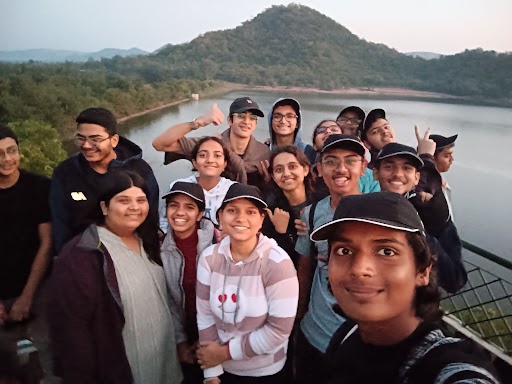

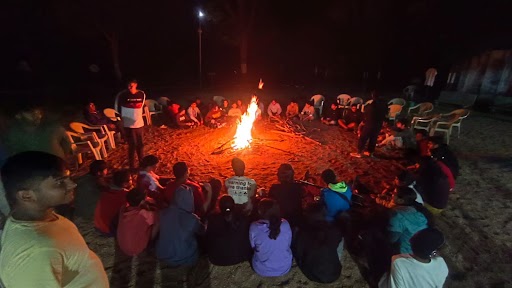
We reached the campsite in afternoon on day 1, and interacted with the local farmers and villagers near our campsite. Upon interaction we got to know more about their lifestyle, challenges, and food. People there sleep early and wake up early, and the farms are their own DIY gym where they work daily. Their usual staple food is Makke ki Roti, which are flatbreads made from corn flour. People over there get many subsidies from the government, and rely heavily on government for many important needs like schools, health centers, emergency services etc. The people seemed satisfied and happy even though they didn’t even have a stable internet and electric connections. We then went for a evening walk to Kada Dam and saw a mesmerizing view. Later at night, we had a bonfire where me and my friend Yug played guitar near the fire and called it a day.
Day 2:


The next day, we went for a short, 1 hour early morning trek, where we saw many local birds, like Black Drango, Babbler, Paradise Flycatcher, Canary, Grey hornbill, etc. The early morning trek was very energizing and loved the bird sighting. Next, we went to Jambughoda healthcare center. We interacted with the doctors over there. The locals and indigenous people suffered from sickle cell disease, which is a major disease at Jambughoda districts. We even learned about the only hospital in Jambughoda, and how during covid the hospital was almost full. There was another huge problem of trusting science instead of ancient rituals and using dark magic which doesn’t work a lot of times. The people over there working to help the people over there and they are continuously building trust and currently the villager’s response is quite well. Lastly, we went to see the pottery making process, how the clay is first prepared, the vessel/pot is made, dried, decorated and finally sold off at various prices. Later we settled around the campfire while me, my friend and Tejas sir played guitar and everyone enjoyed and sang together
Day 3:


On the 3rd day, we went to the local weekly market where everyone puts up their stall and sell their products and handicrafts like pottery, metal work, women accessories, farm fresh food, etc. We all learned a lot more on bargaining while checking out the items. Later that day, we went to the government school near the Eco Tourism Campsite where we interacted with the children, we played games with them, and danced with them. We learnt their way of dances too. We even made reels with them and showing them our style of dances. They all seemed very happy and got friendly quickly. We later at the night went for Meteor Shower Gazing for about 1 hour, where we saw many shooting stars, the highest being 41. It was a really mind blowing sight to hold.
Day 4:


The 4th day started with visiting a hostel, primary a girl’s hostel and a women empowerment center. We interacted with the principle/sister of the hostel and learned more about the history, their missions, their work till now, and their way of supporting the women of the village. I got to know about a specie of tree that provides for all villages. the Mahua tree bears valuable stuff 4 times a year with the Mahua seeds being the most important. They extract fresh Mahua oil from the Mahua seeds and then make various items like soap from the sediments of the oil while using the floating oil for cooking and rest as body care and stuff. Later in the evening, we had a basket making event where we first learned how to weave a bamboo basket and then had a competition of which group makes the best one. My group had made the best basket amongst the 5 groups. Next we started our dinner making activity where me and my group got the task of making rotis for everyone (approx. 250 rotis). We all worked cooperatively and allocated roles wisely to everyone and were the most collaborative team amongst the 5. Later that night, we had a small DJ session with the 2 speakers we had and few of us danced while others grouped for horror stories.
Day 5:


We started day 5 with a long early morning trek, around 4-5 hours where we went through the jungle, saw some flora and fauna, explored a few caves which were mines a long time ago, with bats and a few frogs. Later returning we had a small snake show where we saw a rat snake and 2 others as well. We also got a lot of information on identifying a snake, determining whether it’s poisonous or not and what to do in a snake bite. While returning, we took a stop to pluck some cotton from the cotton farm. In the afternoon we went to another farm for some farming experience. We learned how to protect a plant by removing the unwanted plants near it, got to eat fresh papaya and then had a knot tying session for next day’s adventure activity. That night an Ex-Gram Sarpanch met us where we interacted with him, asked a bunch of questions on governing, the election process, the progress, issues, etc. We discussed about response to natural disasters and and droughts, and government role in their daily lives.
Day 6
We got up early and prepared the rapling/flyingfox rope. We applied the knowledge of tying knots from yesterday’s session and fasten the knot on a tree. We did Rapling and Flyingfox early morning and then got packed up and left for Surat.
Learning Outcomes
LO1: Through immersion in rural life at Dhanpari Village, I identified my adaptability strengths and areas needing growth in understanding different lifestyles and cultural sensitivity.
LO2: Living in a rural environment for 6 days challenged me to learn new skills like traditional farming methods, local crafts, and adapting to a simpler lifestyle.
LO3: Actively participated in planning daily activities and initiatives during the rural stay, demonstrating ability to organize and execute meaningful experiences.
LO4: Maintained commitment throughout the 6-day program despite physical challenges and unfamiliar living conditions, showing perseverance in completing all assigned tasks.
LO5: Worked collaboratively with villagers and fellow students in various activities, learning the value of teamwork in rural community settings.
LO6: Engaged directly with issues of rural development, sustainability, and economic disparities, gaining firsthand understanding of these globally significant challenges.
LO7: Developed ethical awareness through understanding rural lifestyles, respecting local customs, and considering the impact of urbanization on traditional communities.