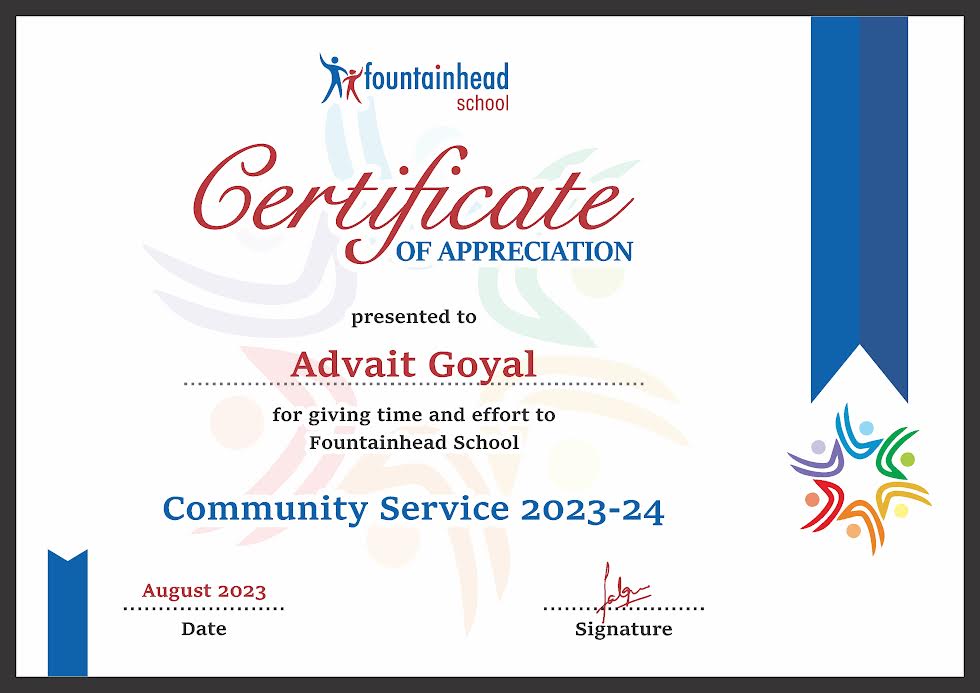
Community Service is a three-week-long initiative organised by the school. The program entails our school extending invitations to local government schools and engaging them in a diverse array of activities such as ICT, Football, Dance, Arts, and Frisbee. Frisbee, in particular, stands out as a unique sport, one for which our school is renowned for. Teaching this sport, deeply embedded in our school’s culture and one in which I am proficient, captured my interest and nudged me to volunteer. Over the course of three weeks, arriving early on weekends to teach children Frisbee proved to be a remarkable experience. It facilitated the development of my skills and provided opportunities to interact with children whom I otherwise wouldn’t have had the chance to engage with.
LO6 DEMONSTRATE ENGAGEMENT WITH ISSUES OF GLOBAL SIGNIFICANCE
Running this program deepened my understanding of issues of global significance related to social justice, privilege and youth development. Socioeconomic disparities that deprive youth of basic opportunities are increasingly prevalent. Through conversations with the children, I gained insights into the public education system of our country, perpetuating how lack of access to extracurricular activities affected them personally, where access to sports and extracurriculars was nonexistent. It was appalling to see how negligence to proper standards of education can have on the development of individuals. Although a small local initiative, seeing firsthand how lack of resources can hamper life chances instilled in me a sense of global citizenship. It exposed me to a global issue, one that I’d like to further cater to in my life.
LO7 CONSIDER THE ETHICS OF CHOICES AND ACTIONS
By considering how particular drills or exercises may make some students feel left out, I was able to adapt my plans and ensure the experience was a positive one for all.My actions also needed to consider the traditional games and sports already popular in the school culture. Introducing something totally foreign risked having the children lose interest or feel it had no relevance to them. By researching common local activities and incorporating familiar elements into the frisbee lessons where possible, I aimed to make the new skills more relatable and appealing. At times, I had to make quick decisions about intervening in gameplay. Stopping play to correct technique or prevent injury required discernment around interfering too much versus letting the children learn through experience. With experience over the weeks, I gained a better sense of when guidance was needed versus when independent play could safely continue without oversight.