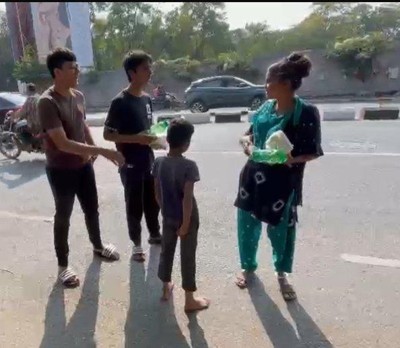
My CAS experience of donating food was both interesting and challenging. My friends and I organized food drives to organise food for those in need and distribute it. This activity falls under the Service strand of CAS as we’re serving foods to the ones sleeping empty stomach every night. We conducted three food drives, donating items like lentils, rice, biscuits and water bottles. In some cases, the store owners we bought from supported our efforts by giving us free water bottles to distribute. However, we also faced challenges, such as managing large crowds. In one incident, people were rushing from all directions, shouting, and some were even intoxicated, creating chaos. Where we had to use our managing skills to manage the crowd and coordinate
LO1: Identify own strengths and develop areas for personal growth
Through this project, I discovered my capacity for empathy and my ability to take the lead in organizing a donation drive. I was able to connect with the recipients, understand their needs, and approach them with dignity and respect. However, I identified a need to improve my organizational skills, particularly in managing logistics. Distributing food evenly across different areas proved challenging, highlighting the importance of better planning in future community service initiatives.
LO2: Demonstrate that challenges have been undertaken, developing new skills in the process
One of the significant challenges we encountered was ensuring the food distribution reached the most vulnerable individuals. Estimating the number of people at each location was difficult, making it challenging to allocate supplies fairly. This experience helped me enhance my problem-solving and adaptability skills as we had to adjust our plans on the spot. By splitting into smaller groups to cover more ground and ensure everyone received something, I also developed stronger teamwork skills.
LO3: Initiate and plan a CAS experience
Launching the food donation drive involved meticulous planning, from identifying the areas where we could have the greatest impact to collecting donations and arranging transportation. My friends and I collaborated with local shops to procure the required items within our budget. A key part of the project was strategizing the efficient distribution of food across various locations. This experience highlighted the importance of having a well-structured plan when organizing service initiatives.
LO4: Show commitment to and perseverance in CAS experiences
The project demanded perseverance, particularly when challenges arose during the distribution process. Overcrowding in some areas made it difficult to ensure an orderly and fair distribution of food. Despite these setbacks, we stayed focused on our goal, refusing to stop until everyone we had planned to help received their share, even if it required extra time and effort. This experience underscored the value of dedication to a cause, even when faced with unforeseen difficulties.
LO5: Demonstrate skills and benefits of working collaboratively
Collaboration played a vital role in the success of this project. My friends and I worked together to collect food supplies, identify target locations, and distribute responsibilities effectively. By coordinating with one another, we ensured that all areas were covered and no one was overlooked. This experience emphasized the significance of teamwork and clear communication, enabling us to maximize our impact by sharing the workload and supporting one another through the challenges we encountered.
LO6: Engage with issues of global significance
This project addressed the globally significant issue of food insecurity, a challenge affecting millions worldwide. While our efforts were localized, they formed part of the broader movement to combat hunger and ensure access to basic necessities for those in need. The experience deepened my awareness of the pervasive nature of food insecurity and highlighted the urgency of collective action to address it. I also came to appreciate the impact of small, community-level contributions in making progress on global challenges.
LO7: Recognize and consider the ethics of choices and actions
Ethical considerations were at the heart of our approach during the food donation drive. We prioritized treating every recipient with dignity and respect, ensuring our actions were considerate and fair. It was crucial to us that the distribution process allowed everyone equal access to the food we provided. This experience heightened my awareness of the importance of making ethical decisions in service activities, especially in our interactions with vulnerable communities.
Final Takeaway
This CAS project allowed me to reflect on the privilege I have and the shared responsibility to support those who are less fortunate. It helped me grow as a communicator, a collaborator, and a principled individual. The experience was both humbling and rewarding, as I witnessed firsthand the impact that small acts of kindness can have on people’s lives. Looking ahead, I am motivated to remain engaged in similar initiatives, as this project deepened my commitment to tackling food insecurity and contributing to my community.