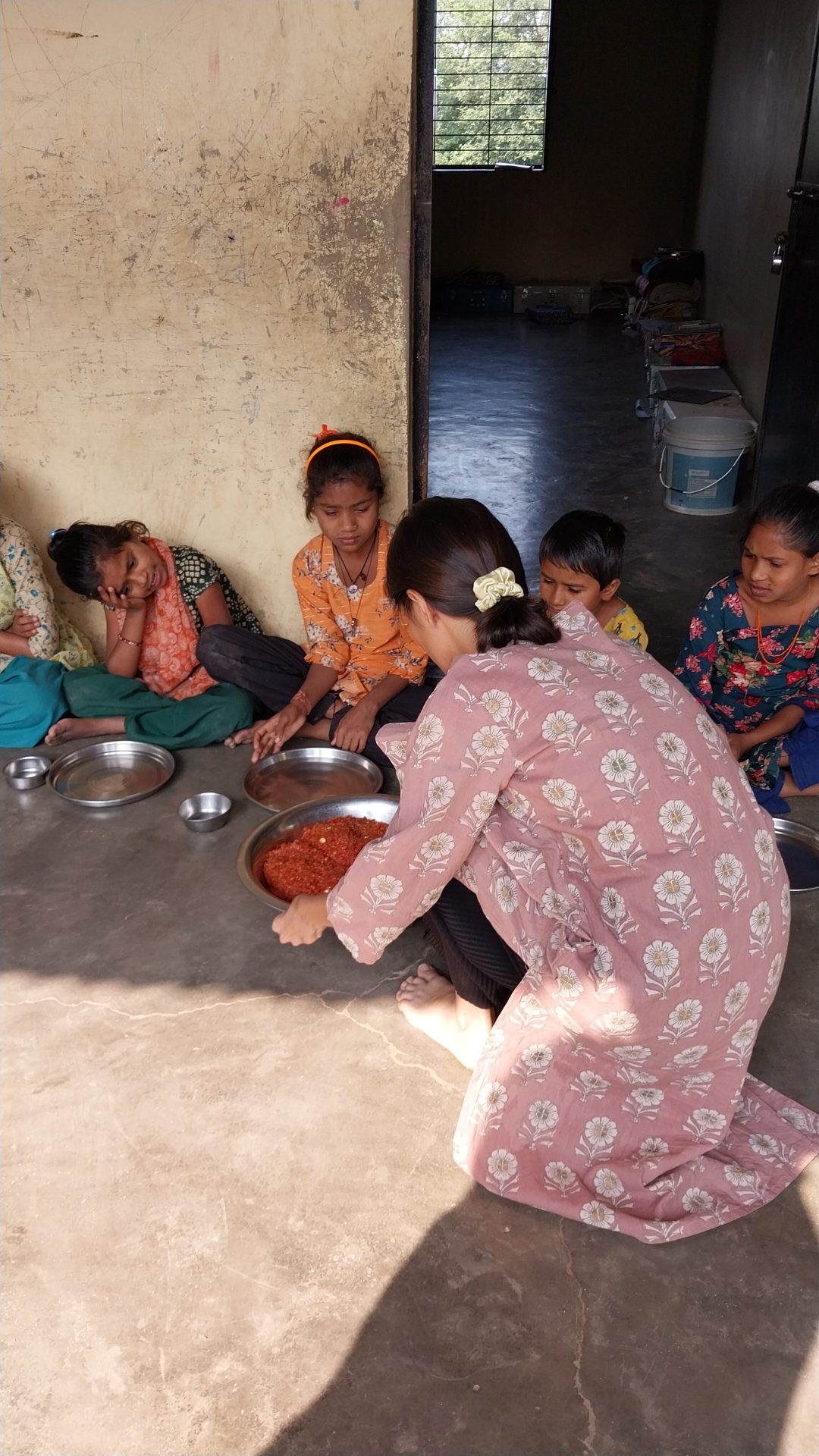
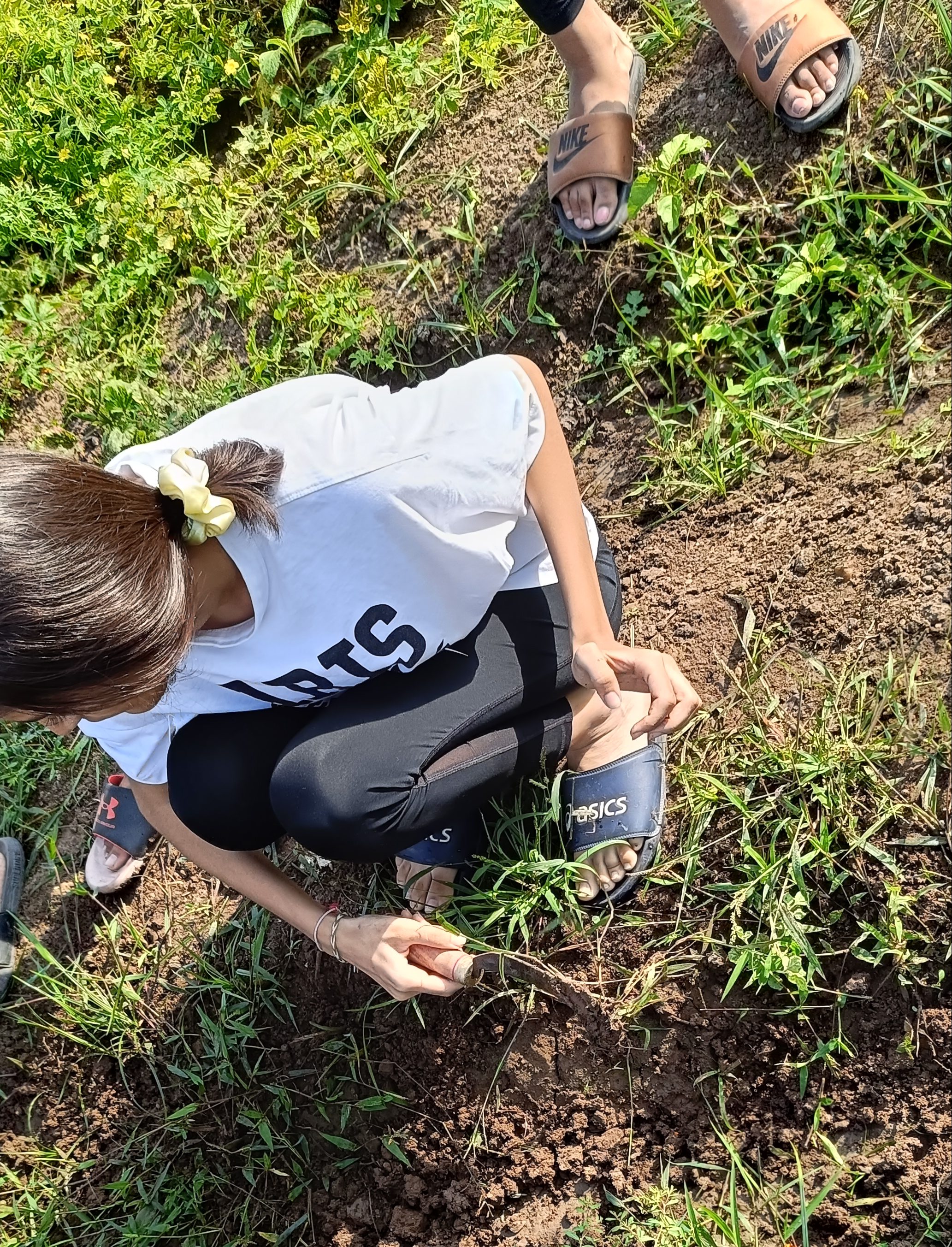
Rural immersion was a 6-day trip (from December 11th to December 16th) that we took to a village named Sankheda. It was a unique experience where we gained insight into raw village lifestyle. We did local activities such as farming, breeding cows, interacting with villagers, and teaching children from ashramshala, and more.
Learning outcomes:
LO1: Identify your own strengths and develop areas for personal growth
During the rural immersion trip to Sankheda, I discovered my strengths in adaptability and communication. Engaging in local activities like farming and teaching, I learned that I could quickly adjust to unfamiliar environments and connect with people from different backgrounds. However, I realized I needed to develop more patience while working with children in the ashramshala, as it was challenging to keep them engaged. This experience highlighted areas where I can grow, particularly in leadership and patience.
LO2 – Demonstrate that challenges have been undertaken, developing new skills
There were several challenges I faced throughout this trip. The first one being : Language barrier. Most people there spoke pure Gujarati which created communication barriers because I am not accustomed to Gujarati. However, I tried my level best to interact with them in bits and pieces with my broken Gujarati, which helped me develop communication skills. Secondly, I wasn’t used to local activities like farming and cow breeding. However, with the assistance of the people there, I learned the process of organic farming, natural process of cow breeding, and much more, which was a very challenging process.
LO3: Demonstrate how to initiate and plan a CAS experience
Initiating and planning the rural immersion trip required careful coordination and consideration of the activities that would provide a meaningful experience for both participants and villagers. By organizing activities like organic farming and teaching sessions, we aimed to immerse ourselves in the local culture while also contributing positively to the community. This experience highlighted the importance of proactive planning and initiative in designing impactful CAS experiences.
LO4 – show perseverance and commitment in CAS experience
This trip was 6 days long which meant we had to wake up each day to experience something unusual. It required a lot of commitment and perseverance to have a fresh mind each day and to be open to learning and undertaking challenges despite being exhausted.
LO5 – Demonstrate skills and benefits of working collaboratively
The entire trip was about experiencing rural life with the people from our class, which meant we had to do everything together as a team, from living in the same house to sharing the same plate while eating. There were several instances where we had to demonstrate social skills. One such instance was when we had to do organic farming. For example, one person would fill the basket with sand, the other would dig the hole, and someone else would sow the seeds and cover the pit. We worked together and divided roles so that we could understand the process better and complete our task on time with efficiency. Another instance was when we were planning activities to teach for the kids at ashramshala; where we worked together as a team to come up with unique and fun games which would teach them basic concepts of science. This made my social skills better and made me realize the significance of cooperation.
LO6 – Engagement with issues of global significance
While I was there, I saw several issues of global significance, some of them being – lack of quality education, lack of proper infrastructure, and lack of sustainability & cleanliness. Firstly, when we went to the ashramshala, I realized how they lacked quality education. They only had 3-4 teachers to teach and take care of 150 children. Secondly, when we were touring the village and interacting with the villagers, one of them raised the concern of not having adequate proper homes. Most villagers lived in mud houses and only some had proper cement houses which were also unfinished. They also did not have access to basic facilities like hospital, schools for higher education and more, so in order to have access to these facilities they had to travel outside their village. Thirdly, while touring the village I observed how some areas were extremely dirty and littered. My engagement with these issues was quite limited because all of these things were out of my hand. However, I did make contributions like raising the issue of littered areas in the panchayat and teaching the kids at ashramshala.
LO7 – Recognize and consider the ethics of choices and actions
Throughout our stay, I learnt about the importance of making mindful choices. As I started to adapt to my new surroundings, I became aware of the privileges I had taken for granted. It made me feel grateful about the resources and facilities I was blessed with. I began by making small changes in my actions like for example, not wasting food. From then on, I made sure I would make mindful choices and actions that would be ethically right.
To conclude, this trip wasn’t just 6 days of staying in a rural area, it was so much more than that. It was about experiencing wild things like milking a cow, doing organic farming in the scorching heat, eating sweet traditional Gujarati food, talking to different people and gaining their wonderful insights and lastly, about realizing the importance of things I’m blessed with.